
▸ SPECIALISED SUB-SERVICE
Palm Pruning in Mallorca
Precise technique, certified climbing, physiological respect for the palm.
What it is
A pruning done the way it should be done.
The palms of Mallorca, from centennial Phoenix dactylifera to the Washingtonia filifera lining the coastal promenades, demand a technique unlike any other tree. Heavy fronds, tall trunks, fibres that break badly: a poor cut leaves scars visible for years, weakens the palm, and at worst invites pests such as the red palm weevil (Rhynchophorus ferrugineus).
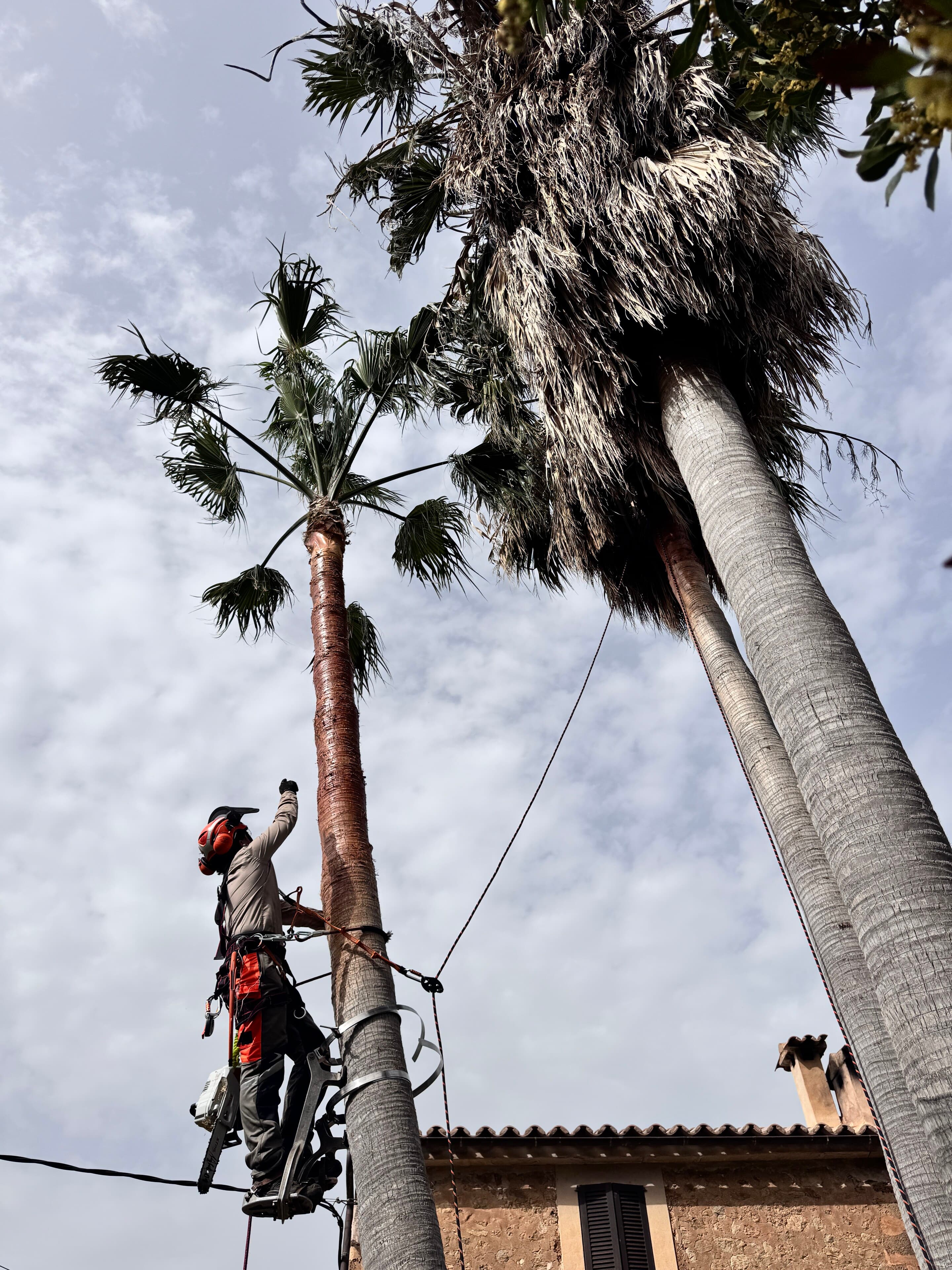
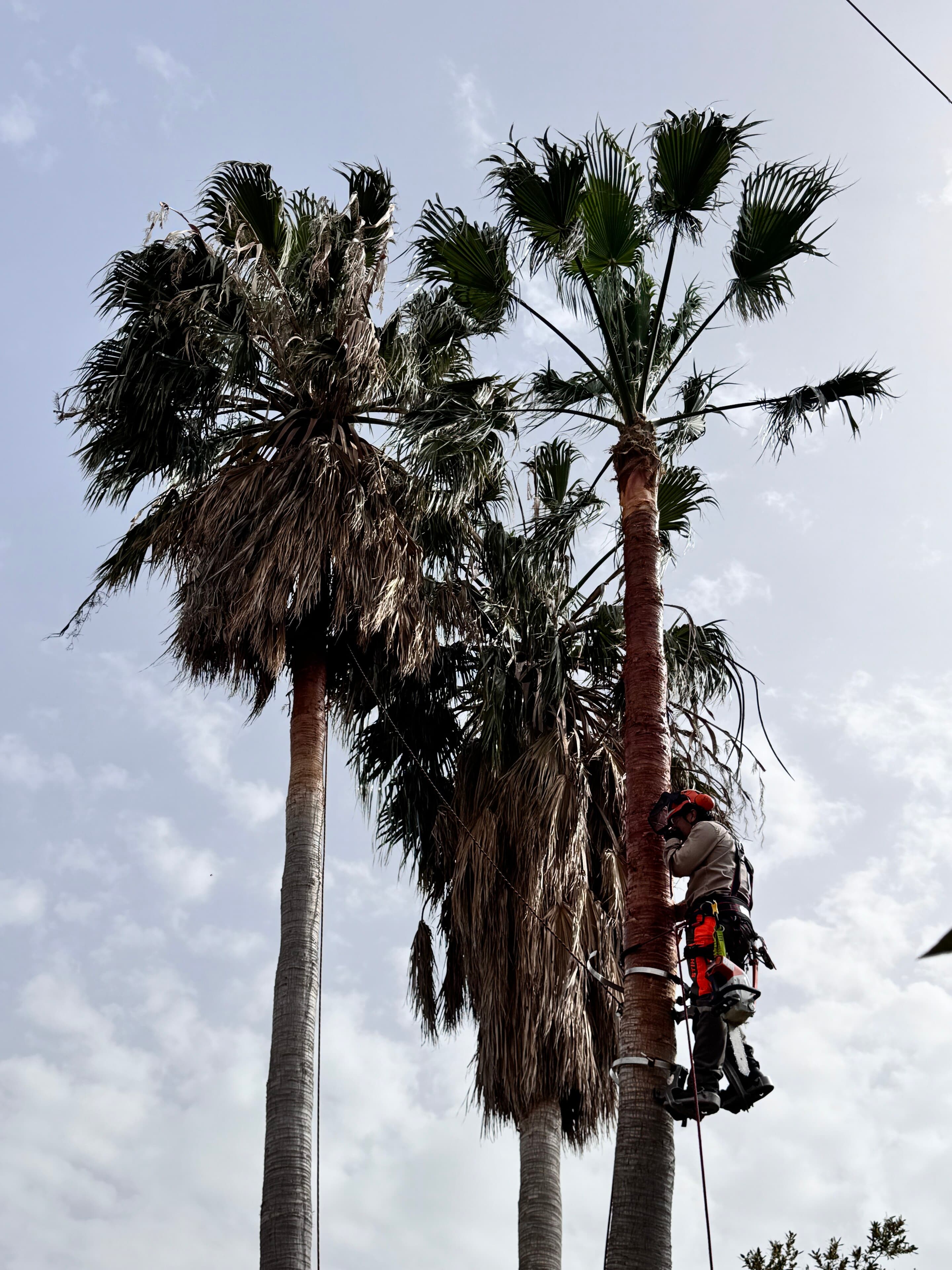
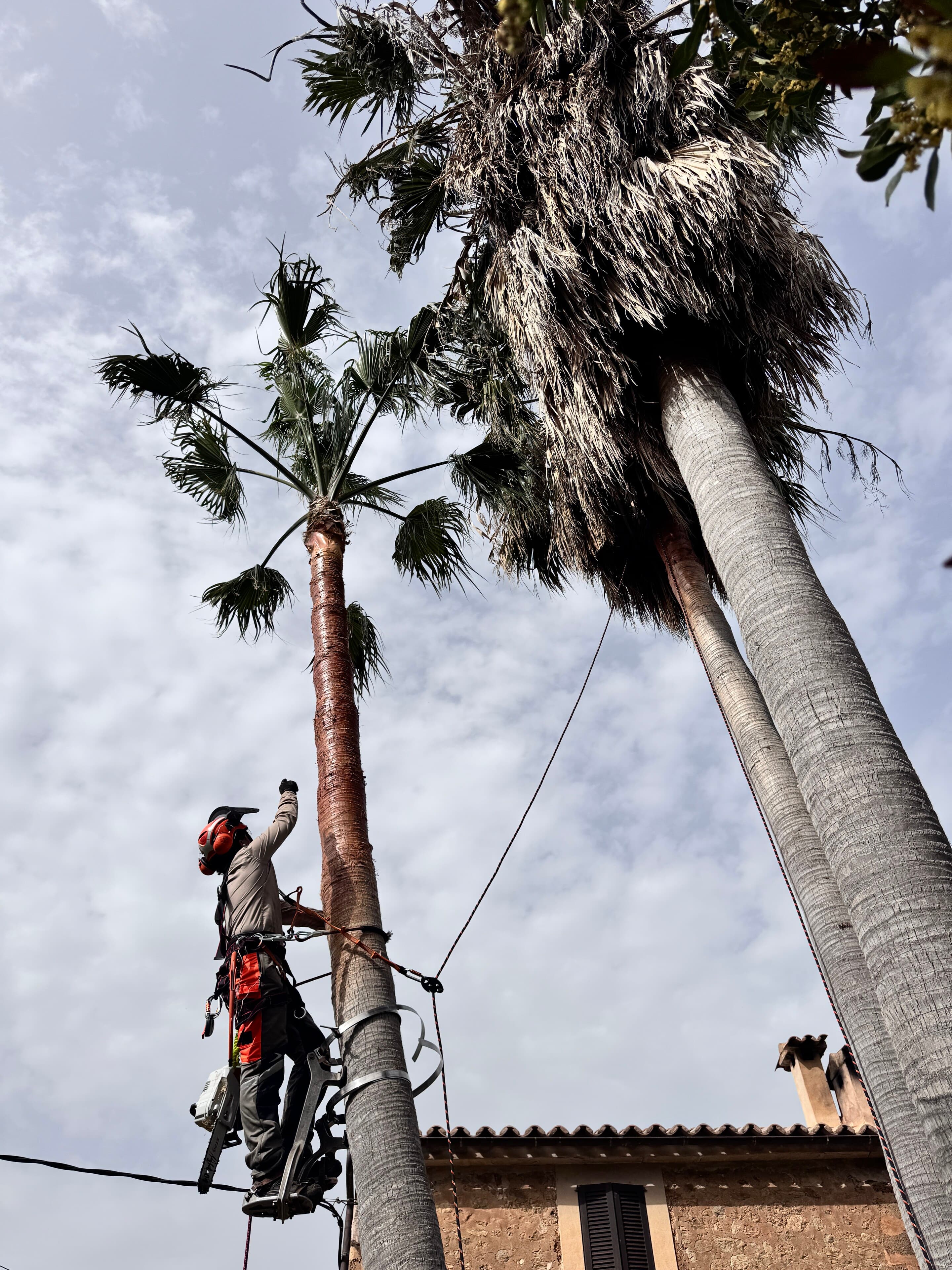
At TerraLuxe Gardens, palm pruning is carried out by a certified arborist using professional climbing gear and electric tools. We never use spurs or grapples that wound the trunk, only rope, harness, and live-tree technique.
We work with physiological respect: we never cut active green fronds when we can avoid it, we remove only dead and threatening fronds, we keep the crown clean without stripping it, and we leave the palm with the natural silhouette of its species. A well-pruned palm stands out from a distance: balanced, healthy, no brutal cuts.
How we do it
Four steps. No shortcuts.
STEP 01
Assessment
Identification of species, age, plant-health status and the actual need to prune. We don't prune for pruning's sake.
STEP 02
Climbing setup
Double rope, harness, safety rigging. Zero impact on the trunk.
STEP 03
Technical pruning
We remove dead, hazardous or destabilising fronds. We keep the crown clean. We never cut what's actively green.
STEP 04
Plant health and waste
Inspection for weevil and other pests. Treatment if needed. Responsible disposal of all green waste.
Species we treat
The palms of Mallorca.
We work with every palm species present in Mallorcan gardens:
- Date palm
- Canary Island palm
- California fan palm
- Mexican fan palm
- Mediterranean dwarf palm (native)
- Chinese windmill palm
Frequently asked questions
What clients ask us most.
- Depends on the species. For Phoenix (date palms, including Canary palm), the best window in Mallorca is March to May, outside the peak red-palm-weevil flight period; autumn is also viable. For Washingtonia, late spring or summer just before the inflorescences shed seeds and bracts is often the ideal moment: removes the heavy flowering structures before they drop debris everywhere. Avoid pruning when the palm is under heat or drought stress.
- No. The palm draws nutrients from active green fronds. Pruning them weakens the palm. We remove only dead, damaged or fall-hazard fronds.
- We inspect the apical bud, the young petioles and the base of the fronds visually. We look for galleries, exudates, moths around the bud, and weakened central fronds. If there is suspicion, we recommend a crown drench treatment with an authorised systemic product.
- Yes. We remove all green waste the same day and process it at authorised composting plants in Mallorca.
- Yes. The standard treatment is a crown drench: we soak the apical bud (the eye of the palm, where the spear leaf emerges) with an authorised systemic product until it is absorbed. It covers both Paysandisia archon (the main Washingtonia threat) and the red palm weevil (Rhynchophorus ferrugineus, more typical of Phoenix). Endotherapy, still used in some cases, leaves permanent punctures in an organism that does not heal; we prefer the crown drench when it is viable.
Further reading
Journal · On palms
PLANTS · 8 MIN
Washingtonia filifera: why we prune it this way.
One of the most iconic palms in the Balearic landscape is also one of the worst-pruned. How we work the Washingtonia, step by step, respecting its physiology.
CRAFT · 7 MIN
How to climb a palm without killing it.
Palm climbing frame, rope, or gaff spurs. Each way of reaching the crown leaves a different mark on the trunk, and that mark decides how long the palm will live.
This service is part of the cluster Specialised Services