
▸ SERVICE AREA · SOUTHWEST COAST
Garden care in Andratx, Calvià and Santa Ponsa.
Exclusive coast, limestone soil, westerly wind. The southwest's gardens ask you to listen to the place.
The area
Exclusive coast, complex geology.
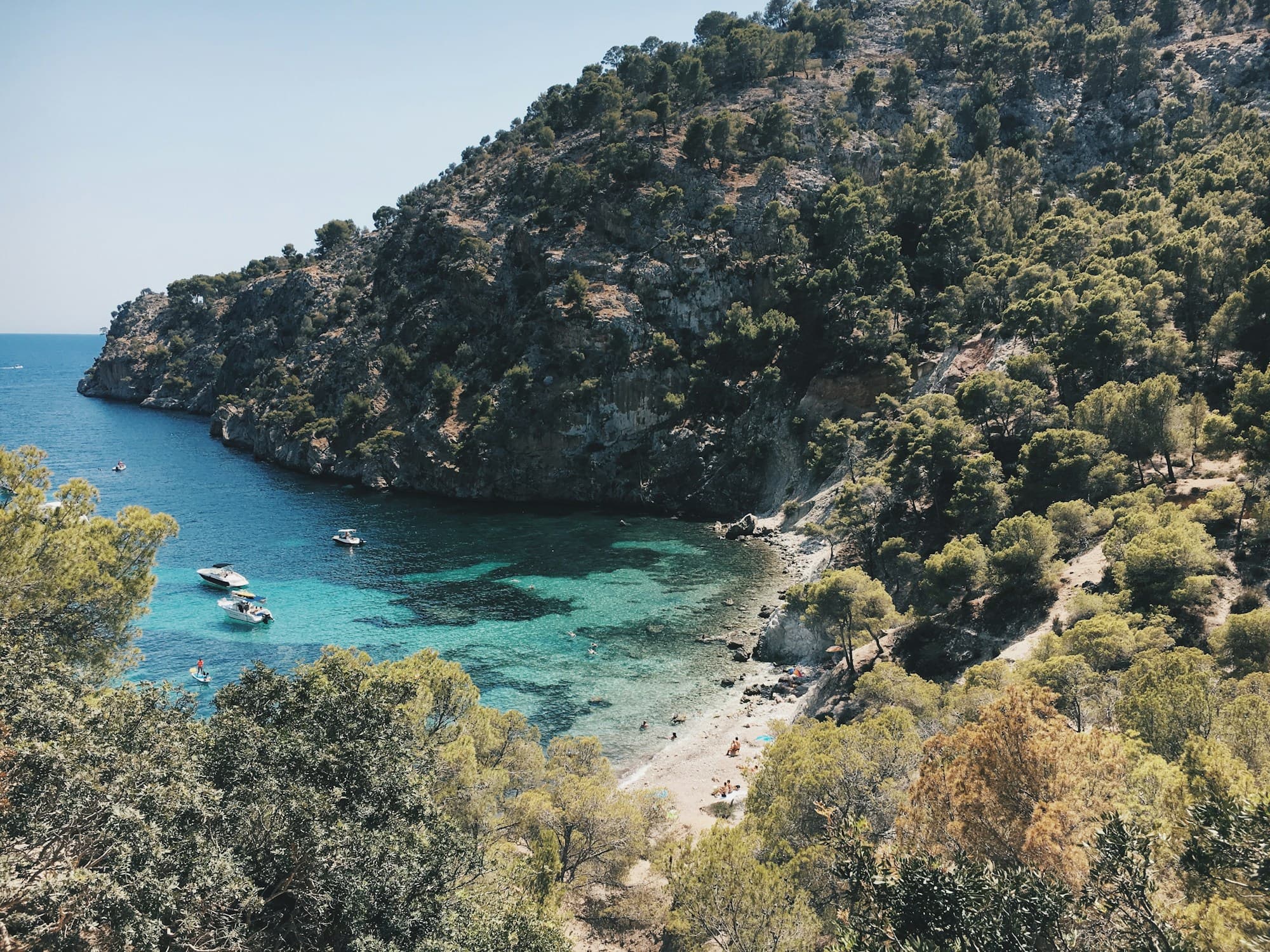
The southwest of Mallorca draws an unmistakable coastline: Port d'Andratx, Camp de Mar, Bendinat, Costa de la Calma, Sol de Mallorca, Santa Ponsa, Cala Fornells. In just a few kilometres you find marina, gated residential development, traditional finca turned residence and homeowners' association with shared garden, all sharing the same map. Each pocket has its own microclimate: the inlet of Andratx sits sheltered by the headland, Bendinat and Sol de Mallorca look out over small protected coves, and Santa Ponsa takes the full force of the westerly wind and the sea salt that defines the whole open littoral of this quadrant.
The dominant soil is limestone, with rocky outcrops and very little topsoil over slope, which sets the entire palette available here. Topiary olive, pittosporum, tamarisk, bougainvillea, agave and other salt-tolerant species have earned their place because they handle what the climate imposes. The southwest is also the part of the island with the highest density of designed gardens, with a high standard of maintenance, carefully planned drip irrigation, and a style that swings between the formal Mediterranean garden of the old villa and the cleaner, more architectural contemporary garden of the new build.
Zone data
Soil, climate and altitude.
- Soil
- Annual rainfall
- Sunshine hours
- Typical altitude
The towns
Three towns, three characters.
Andratx
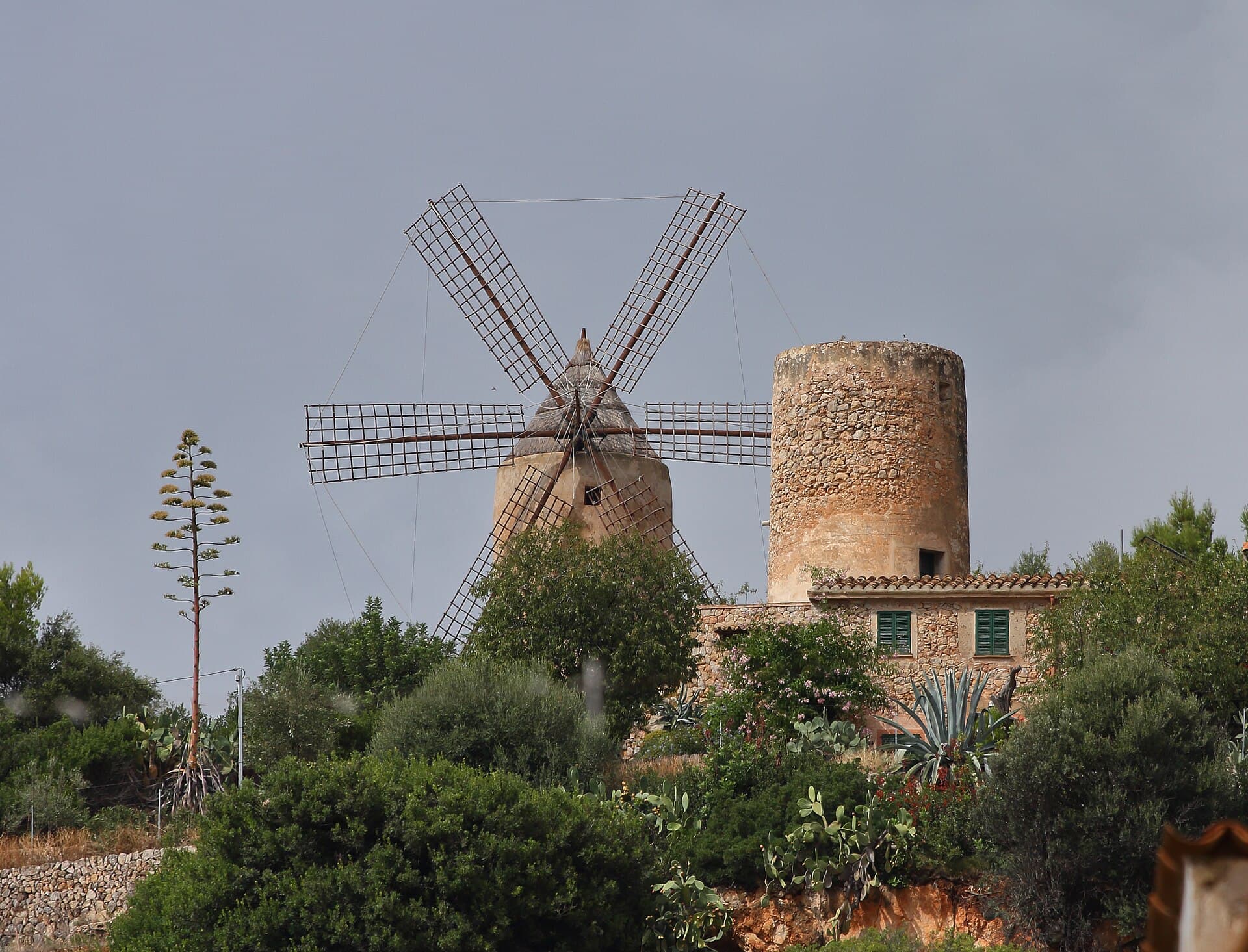
Andratx still carries the character of an agricultural village quietly transformed: inherited almond and olive estates live alongside modern villas around the port, and the urban centre keeps the discreet scale of the lifelong Mallorcan town. The soil is alkaline and coastal salinity shapes the entire choice of plant, with familiar tolerants such as Pittosporum tobira, Tamarix gallica, free-form Olea europaea, Nerium oleander, Schinus molle and mature date palm. Gardens here read rural-elegant rather than coastal-resort: dry-stone walls, Aleppo pine shade, Mallorcan gravel, low-water planting and a matrix of Mediterranean aromatics (rosemary, lavender, thyme). Seasonal maintenance, with particular attention to the westerly wind that dries out the western face of every estate.
Calvià
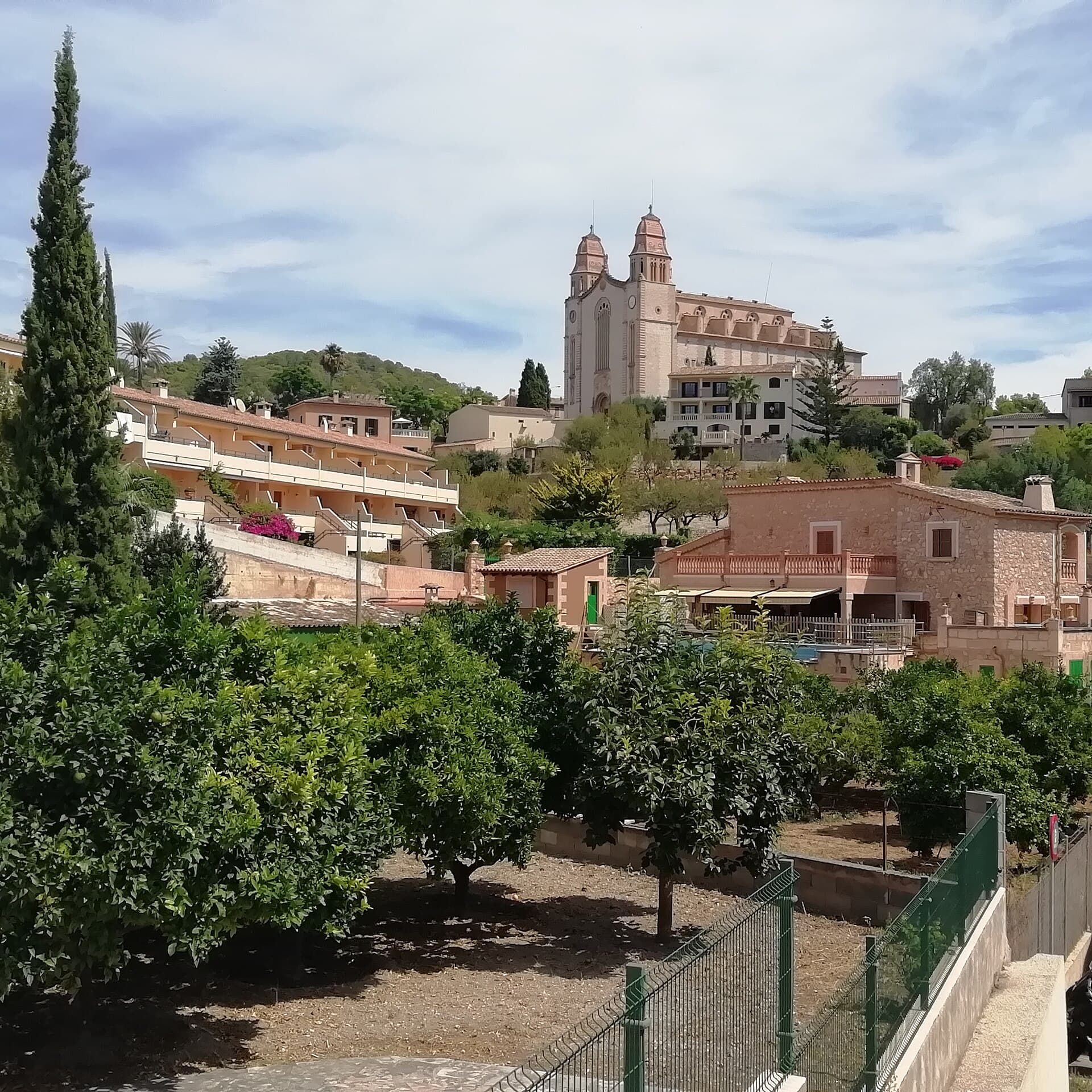
Calvià is the villa municipality par excellence. Bendinat, Costa de la Calma, Sol de Mallorca and Portals Nous concentrate designed-garden projects, with a high maintenance cadence and a clearly contemporary taste. The classic image combines topiary olive, timber pergola, white-gravel court, drought-tolerant planting and a moonlight lighting scheme conceived around outdoor dining. The recurring plant palette mixes Olea europaea with clipped cypress, Strelitzia, agave, lavender and bougainvillea, on a thin soil over limestone bedrock that demands carefully designed drip irrigation, often with sensors and telemetry in the more refined projects. This is the zone where the garden is read as an architectural element integrated from the drawings stage, not added at the end.
Santa Ponsa
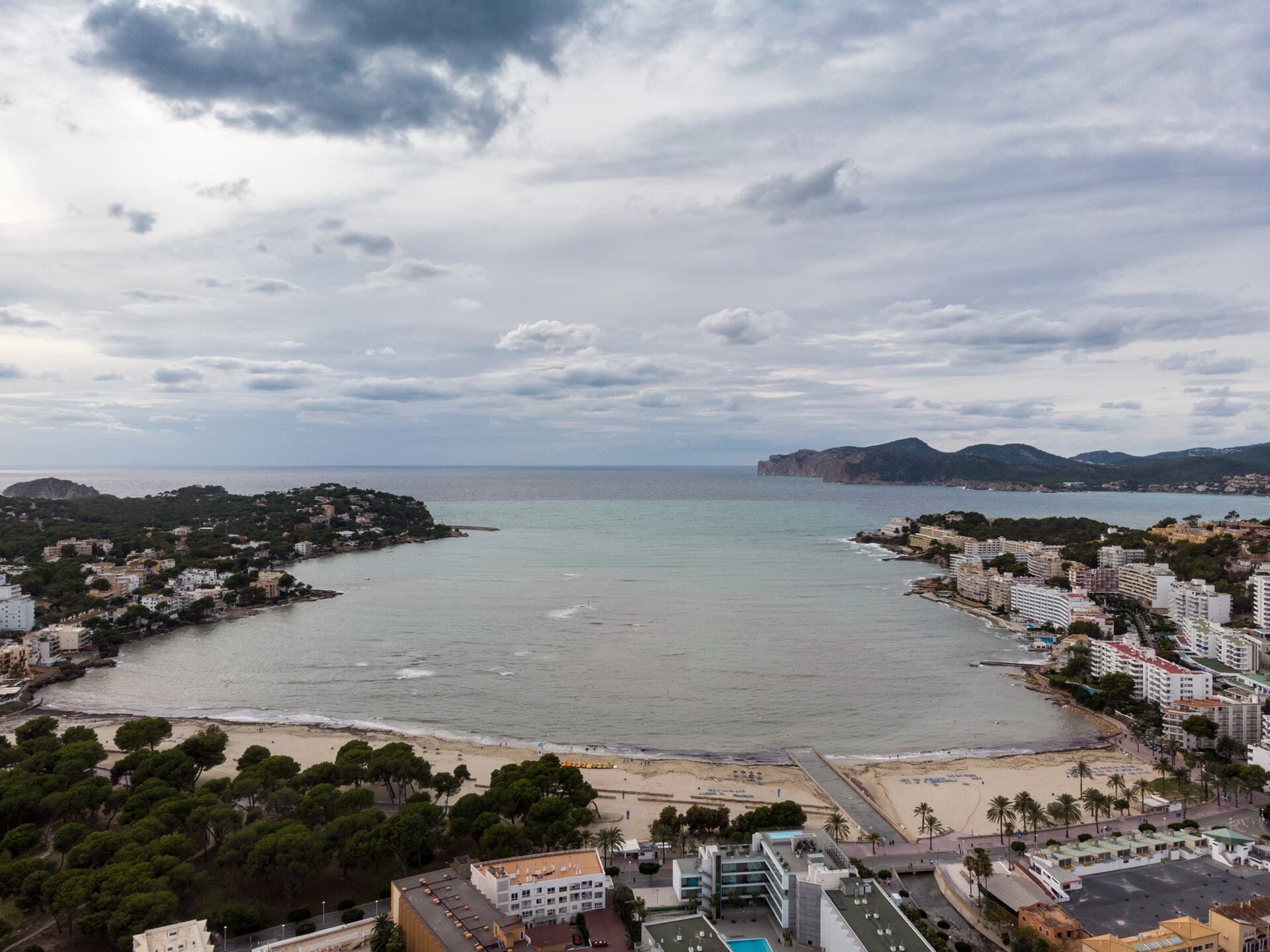
Santa Ponsa concentrates international clients, mostly German and British, with a residential park dominated by gated communities and two well-known golf courses. Gardens split between the community garden (shared areas with Phoenix canariensis, hard-wearing lawn and low-maintenance planting) and the private garden inside each plot, where the brief is freer and more personal. The dominant style mixes the formal Mediterranean garden with the palm-and-pool image of property marketing, lifted by more restrained planting in the recent projects (mastic, rockrose, rosemary, lavender, tamarisk). Maintenance is more standardised, the calendar predictable, the exposure to westerly wind and sea salt of the open coast full-on.
Services available on the southwest coast.
Maintenance
Regular calendar for villa, community garden and estate with topiary olive, palms and salt-tolerant planting.
Specialised
Palm pruning, large-tree pruning over pools, land clearing and robot mowing on exclusive plots.
Creation
New-garden design or full renovation in contemporary villas, with sustainable landscaping tuned to the southwest.
Where we work
We serve all of Mallorca.
Each area has its own character, soil and gardens. Click a zone to discover it.
We serve villas and properties in Andratx, Calvià, Santa Ponsa on the southwest coast; Banyalbufar, Estellencs, Deià in the northern Tramuntana; Valldemossa, Bunyola in the central Tramuntana; Palma, Marratxí in the Bay of Palma; Llucmajor, Campos, Felanitx, Sant Joan, Santanyí across the Migjorn; Sóller; and Alcúdia, Pollença in the north.
Frequently asked questions
- The south-west coast is salt-tolerant, west-wind country. The recurring palette combines topiary and free-form Olea europaea, Pittosporum tobira hedging, Tamarix gallica, Nerium oleander, mature Phoenix dactylifera and Phoenix canariensis, grouped Cupressus sempervirens, agave, Bougainvillea and Schinus molle, over a base of Lavandula, Rosmarinus officinalis and Thymus. On shallow calcareous soil over rock, every species here has earned its place by surviving the sea aerosol.
- The dominant work is intensive maintenance of designed gardens: topiary olive, mature palm, drought-tolerant planting and well-zoned drip irrigation, often with sensors and telemetry in Calvià villas. Santa Ponsa is weighted towards community gardens and hotels on a predictable calendar; Andratx leans rural-elegant, with dry-stone walls and Mallorcan gravel. Palm pruning at height, tree pruning over swimming pools and full new-garden design for contemporary villas complete the regular repertoire.
- With 400-500 mm of annual rainfall and nearly 3,000 hours of sun, the calendar steers clear of the dry summer. Hard pruning of topiary olive and palm is scheduled between late winter and early spring; new planting goes in during autumn, when the rains return and the ground is still warm. Summer is reserved for light maintenance and fine-tuning irrigation, because the west wind and salinity multiply water stress on anything not adapted.