
▸ SERVICE AREA · CENTRAL TRAMUNTANA
Garden care in Valldemossa and Bunyola.
Inland Tramuntana, almonds and ancient olives. Mountain gardens, cool microclimate, mineral palette.
The area
Central Tramuntana, high-ground craft.
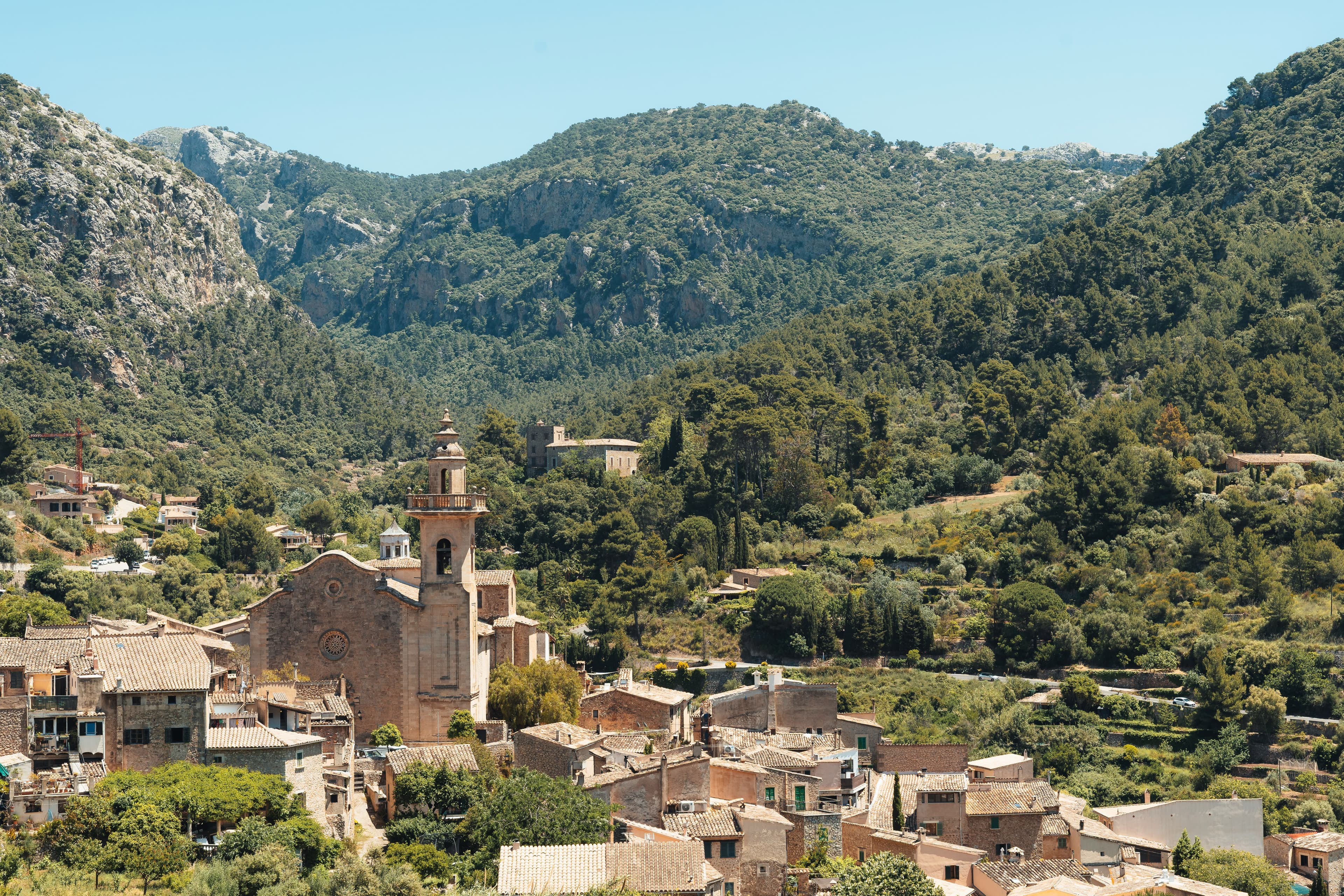
The central Tramuntana is the inland sierra, without a coastline of its own and with a character distinct from the littoral. Valldemossa and Bunyola share a landscape of scattered almond, old olive, dense holm-oak woodland and converted traditional fincas at generous scale, at altitudes that reach 400 or 500 metres above the sea and a microclimate noticeably cooler and damper than the plain. Winters here are real, with occasional frosts in the hollows, summers stay warm but the nights cool down, and the transition between seasons reads more clearly than on the coast. This is a zone of large estates with residential intent, not marketing villas.
High-ground gardens call for plants that handle winter cold and shallow soil over limestone, with a mineral palette and deep greens. Century-old Olea europaea, Cupressus sempervirens, Quercus ilex (the carrasca of long memory) and mature Phoenix dactylifera form the structure; below them come Mediterranean fruit trees (Punica granatum, Ficus carica, Citrus aurantium as the most frost-tolerant citrus) and the usual aromatic matrix of Rosmarinus, Lavandula, Thymus, Salvia and Cistus. The slope and the rock dominate the ground, so most interventions start by planning access, maintaining terraces and protecting the old tree, well before any new planting goes in.
Zone data
Soil, climate and altitude.
- Soil
- Annual rainfall
- Sunshine hours
- Typical altitude
The towns
Two villages, two scales.
Valldemossa
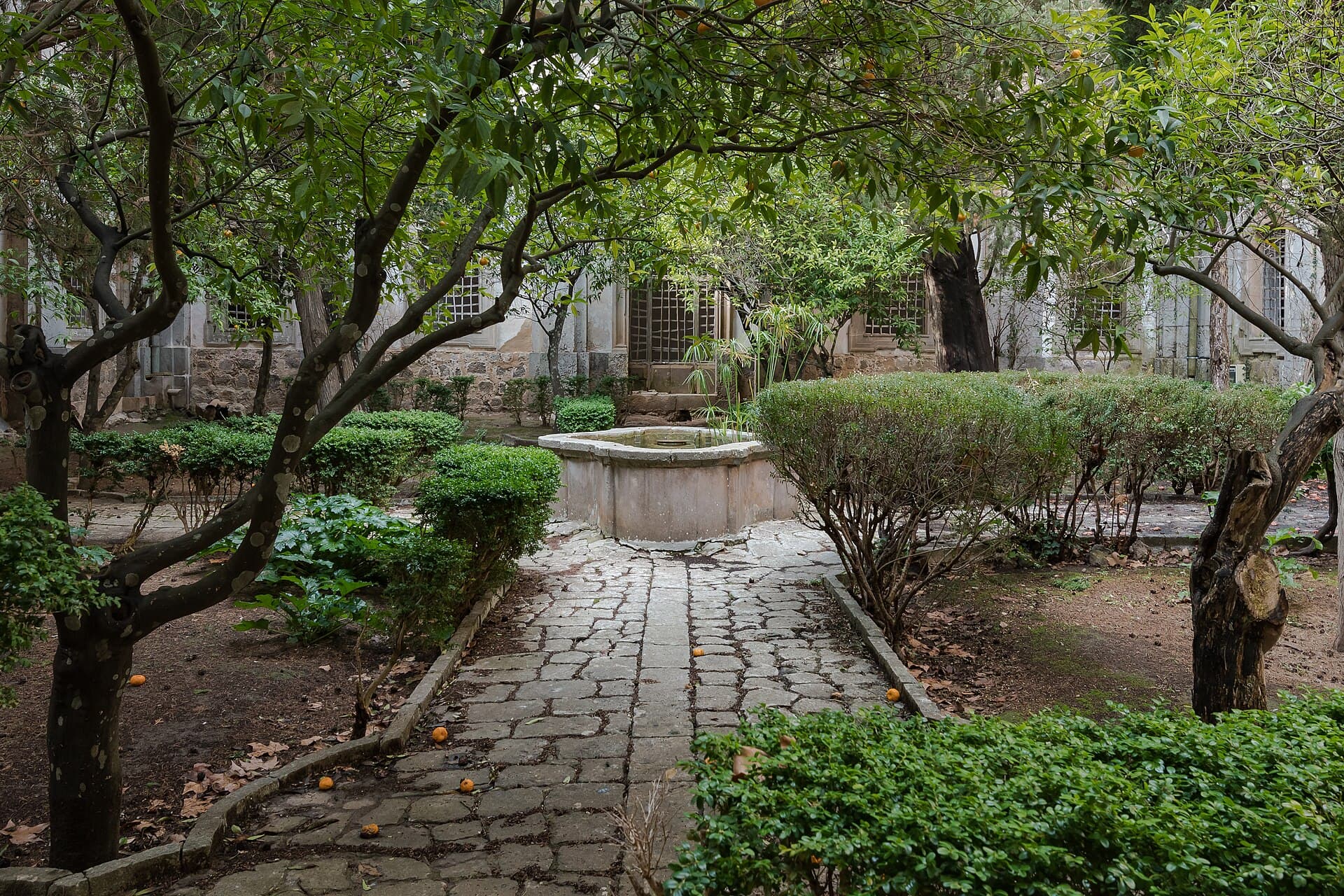
Valldemossa concentrates the monastic heritage of the Cartoixa and a relatively small premium residential park, tightly bound to the cobbled historic centre. Typical gardens are those of high-ground estates with stone-paved walls, continuous holm-oak shade and cold-tolerant planting: free-form Olea europaea, Cupressus sempervirens in groups, existing Quercus ilex kept as structure, Mediterranean fruit trees (Punica granatum, Citrus aurantium, Ficus carica) and stone-paved courtyards with Citrus sinensis in terracotta pots as a detail. The proximity of the protected sierra obliges the garden to merge with the holm-oak forest without a hard boundary, so the ornamental piece dissolves into the surrounding woodland. Microclimate cooler than the island average, high relative humidity and occasional frost in winter. Projects demand a feel for heritage and respect for the inherited tree, which often carries more history than the house itself.
Bunyola
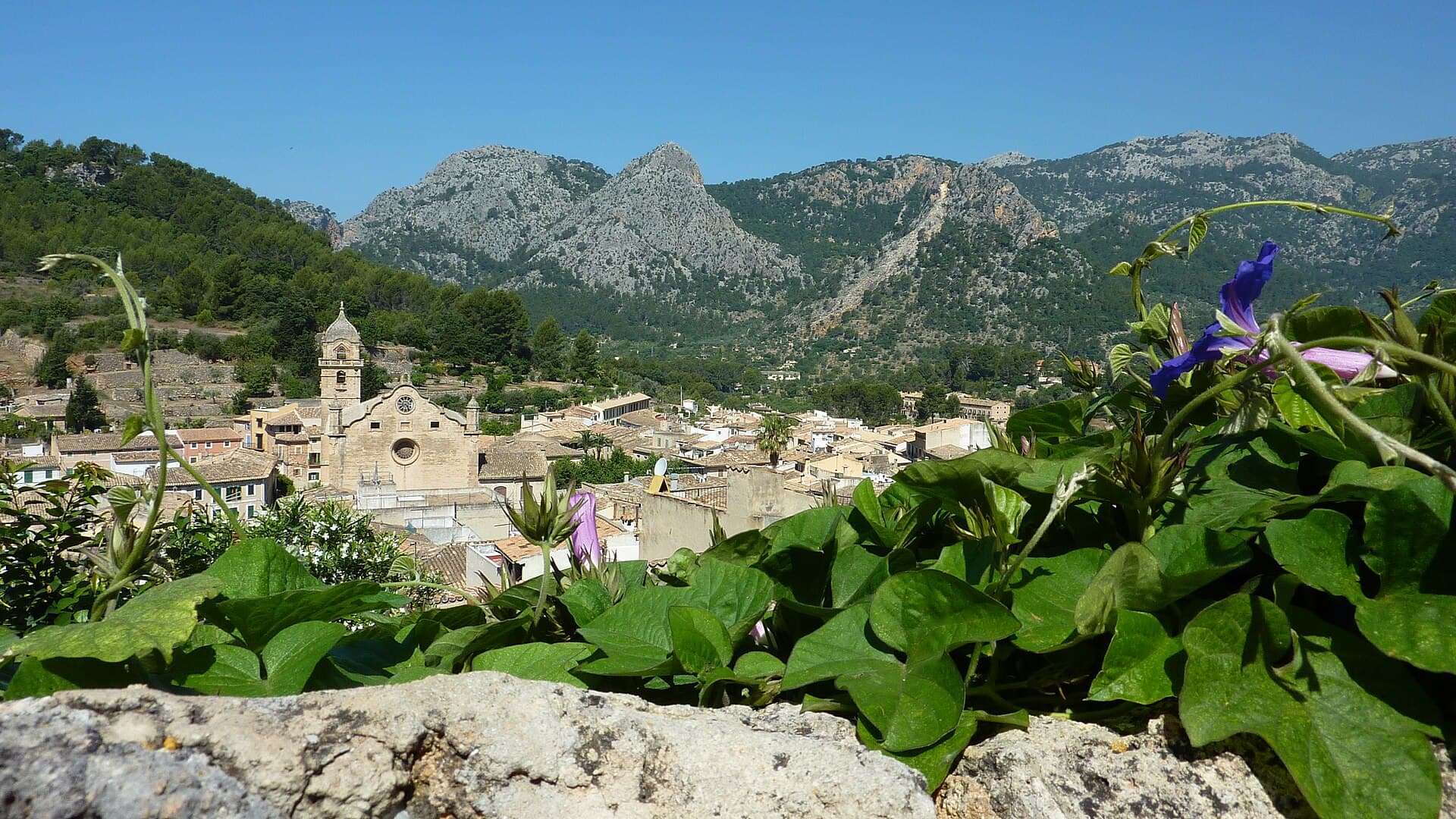
Bunyola has a more active agricultural base than Valldemossa: productive olive groves, almond, carob and holm oak coexist with large fincas that have shifted to residential use without losing the craft of the land. The altitude is lower but the soil is still calcareous and rocky, on a slope, with occasional winter frosts. The typical garden palette is built on century-old olives and almonds, with Mediterranean fruit trees (fig, pomegranate, bitter orange as a more cold-tolerant citrus), free-growing holm oak as structure, and a matrix of aromatics (rosemary, lavender, thyme, sage) that thrives in dry, sun-exposed soil. Large-finca maintenance, annual olive pruning, control of Mediterranean scrub on slopes.
Services available in the central Tramuntana.
Maintenance
Large-finca calendar: seasonal pruning, water management, scrub control on slopes and terrace upkeep.
Specialised
Pruning of tall trees on slopes, productive olive-grove pruning, land clearing with respect for dry-stone walls.
Creation
Garden design on high-ground estates: integration with the holm-oak forest, cold-tolerant planting, mineral palette.
Where we work
We serve all of Mallorca.
Each area has its own character, soil and gardens. Click a zone to discover it.
We serve villas and properties in Andratx, Calvià, Santa Ponsa on the southwest coast; Banyalbufar, Estellencs, Deià in the northern Tramuntana; Valldemossa, Bunyola in the central Tramuntana; Palma, Marratxí in the Bay of Palma; Llucmajor, Campos, Felanitx, Sant Joan, Santanyí across the Migjorn; Sóller; and Alcúdia, Pollença in the north.
Frequently asked questions
- Gardens in the central Tramuntana call for plants that handle winter cold and shallow soil over limestone. The structure is held by century-old Olea europaea, Cupressus sempervirens, Quercus ilex (the carrasca) and mature Phoenix dactylifera, with Mediterranean fruit trees such as Punica granatum, Ficus carica and Citrus aurantium, the most frost-tolerant citrus. The usual aromatic base combines Rosmarinus, Lavandula, Thymus, Salvia and Cistus, in deep greens and a mineral palette.
- Large-finca residential work dominates: annual pruning of productive olive groves, terrace and dry-stone wall upkeep, control of Mediterranean scrub on slopes and protection of the inherited old holm oak. In Valldemossa the garden tends to merge with the protected holm-oak forest without a hard boundary; in Bunyola the agricultural calendar of olive and almond weighs more. New design almost always starts with planning access on a slope, well before any planting.
- At 200-500 metres of altitude, winters are real and frost is occasional in the hollows. Olive-grove pruning is scheduled at the end of winter, once the risk of hard frost has passed; new planting goes in during autumn to make use of the 700-900 mm of annual rainfall. Summer nights cool down, which extends the useful maintenance window beyond what the plain allows, but irrigation remains decisive in July and August.