
▸ SERVICE AREA · NORTH TRAMUNTANA
Garden care in Deià, Estellencs and Banyalbufar.
Dry-stone terraces, ancient olive groves, the sea behind. Here gardens are inherited more than designed.
The area
Coastal Tramuntana, patient craft.
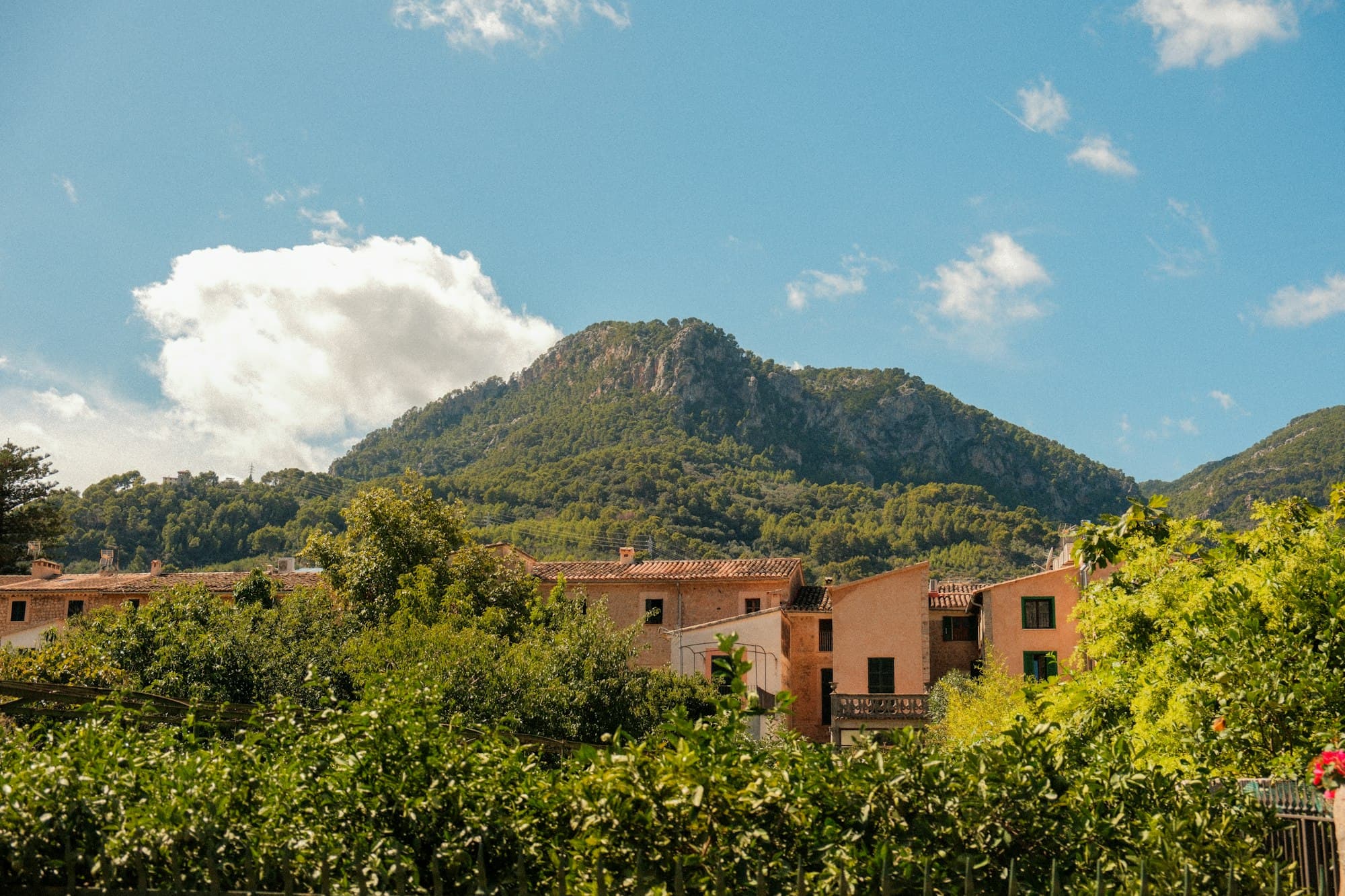
The coastal northern Tramuntana is a landscape earned through effort, not money. Dry-stone terraces climb the hillside for kilometres, century-old olive estates pass within the same family across generations, the village houses look modest from the street and turn out to be remarkably cared for inside, and the owner profile mixes the long-standing Mallorcan family with the international resident who first came for the light of Deià and stayed. Robert Graves left his mark on Deià; Estellencs and Banyalbufar, more sheltered, keep the intimate scale of the mountain village, with a life set by the agricultural calendar and very little permeability to mass tourism.
Gardens here respect the topography they inherited; they don't try to correct it. Walls hold soil in place, water flows by gravity from cistern or aljibe, and the palette is built with native plants that already know the slope and the wind of the torrent. Century-old Olea europaea, Cupressus sempervirens, Pinus halepensis and Quercus ilex form the tree matrix; below them sit Rosmarinus officinalis, Lavandula angustifolia, Cistus albidus and Pistacia lentiscus, all perfectly adapted to the shallow soil over limestone. The craft is to step in lightly and well: restore the terrace when it gives way, prune the old olive in its own rhythm, and keep the inherited tree wherever you can.
Zone data
Soil, climate and altitude.
- Soil
- Annual rainfall
- Sunshine hours
- Typical altitude
The towns
Three villages, one mountain.
Deià
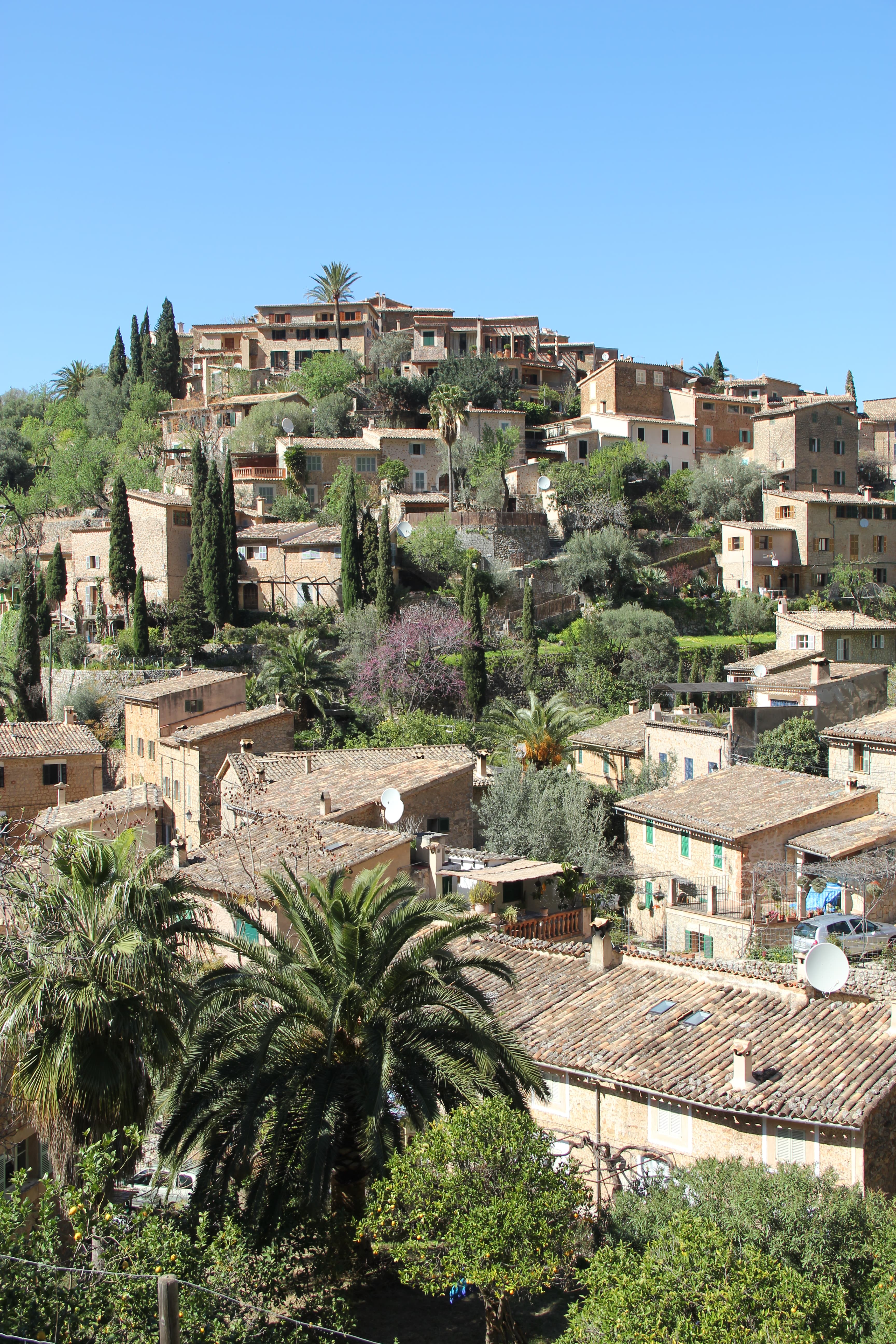
Deià is the Tramuntana at its purest: a village hung between the sierra and the sea, stone houses pressed together around the bell tower, inherited olive estates filling every gully, and a residential mix of long-standing Mallorcan families, artists' houses and quietly tasteful expat mansions. The most representative gardens are those of the terraced estate, where century-old Olea europaea lives alongside columnar Cupressus sempervirens and Mediterranean fruit trees (pomegranate, fig, almond), and the modern villa that takes the sea view without trying to compete with it. The usual technical challenge is the slope: any intervention demands rebuilding dry-stone walls before planting, and planning gravity-fed irrigation rather than pressurised. The aesthetic, read up close, is austere, vegetal, almost monastic.
Estellencs
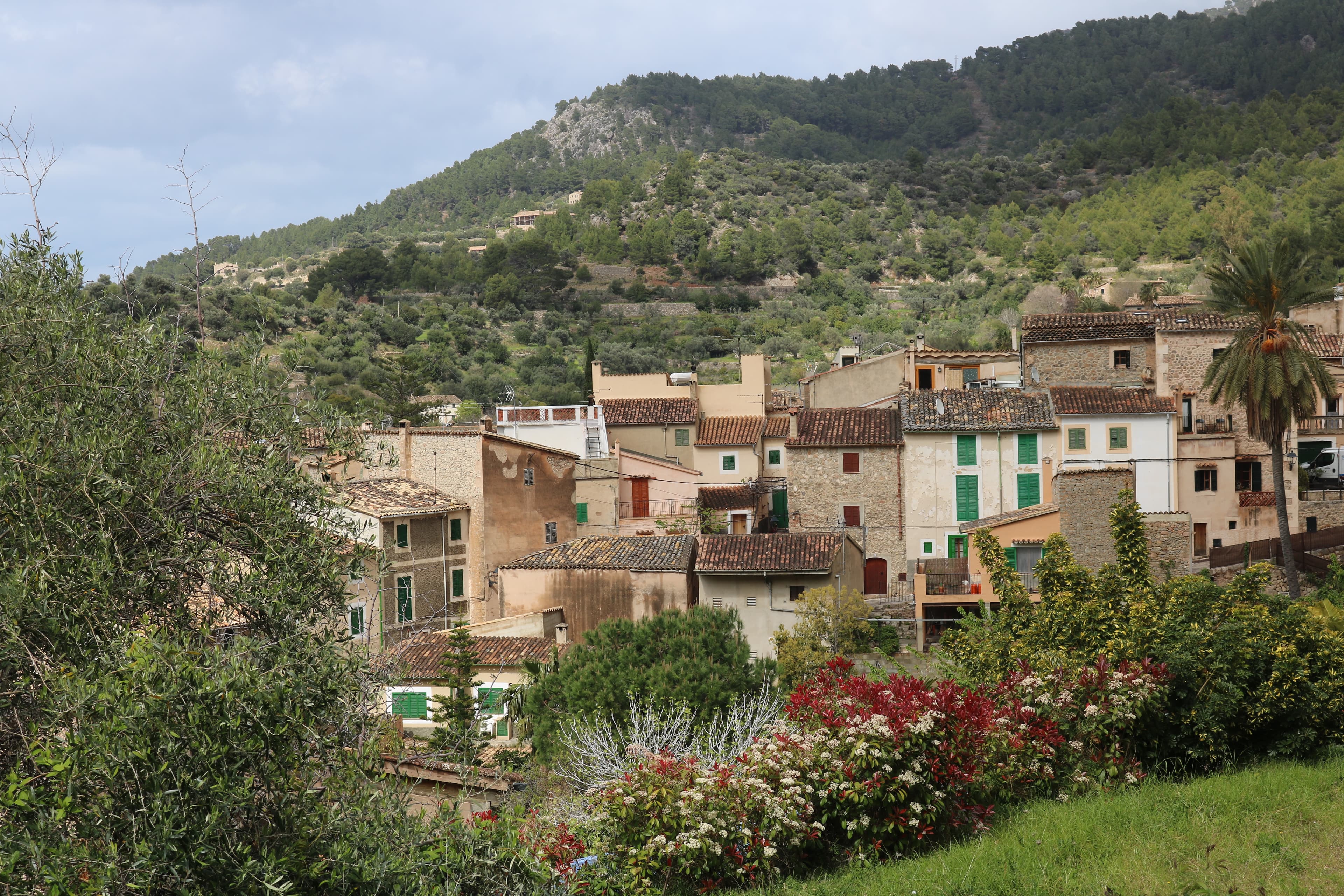
Estellencs sits more sheltered behind the hillside, with sea access made difficult by the geography itself and a residential park noticeably smaller than that of Deià. Gardens here are still, in their majority, on rural fincas that remain actively farmed: productive terraced olive groves, scattered almond, subsistence kitchen garden, small vineyard, the occasional possessió that combines all three. When a finca turns residential, the challenge is to keep the agricultural image without losing function: annual pruning of Olea europaea, dry-stone wall maintenance, adapted irrigation, and discreet ornamental planting with Lavandula, Rosmarinus, Cistus and Pistacia lentiscus, all low-water. The high shade of Pinus halepensis and the humidity of the torrent allow species slightly more demanding than in the dry south. Low-impact maintenance, calendar set by the olive harvest.
Banyalbufar
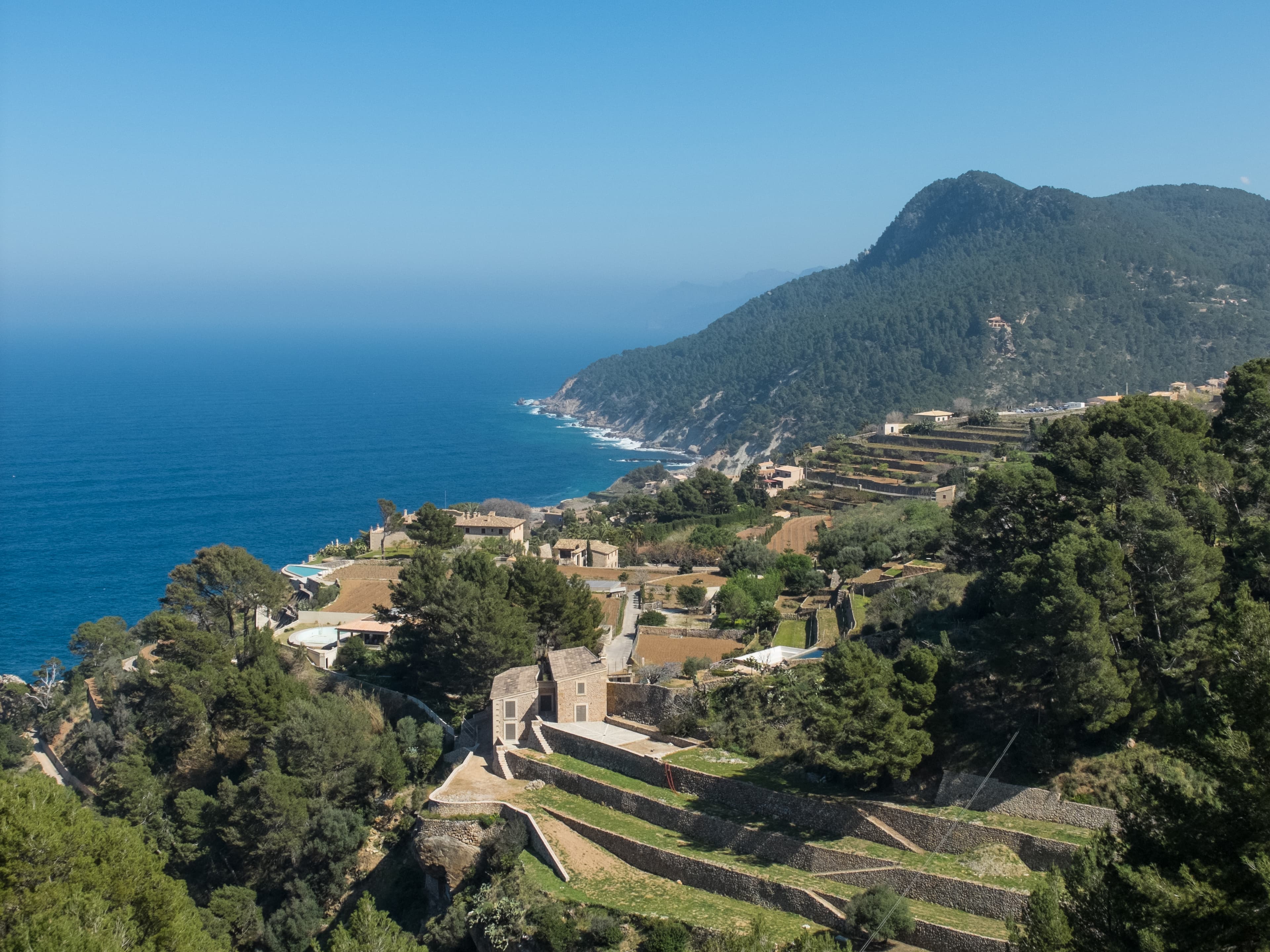
Banyalbufar is famous for its marjades, the stepped terraces descending from the village down to the sea like a long stone staircase; local Malvasia is still grown on some of them. Gardens and orchards here are inseparable from the terrace: ornamental and productive sit side by side, and the technical priority of any project is the cistern, the aljibe and the channelling of rainwater, long before the plant itself. The residential park is small, made up of narrow-fronted village houses and the occasional finca converted with sensibility. Typical gardens keep Vitis vinifera, Olea europaea and Mediterranean fruit trees (fig, pomegranate, bitter orange) as the backbone, with Lavandula, Rosmarinus, Cistus and Pistacia lentiscus filling the base. Terrace restoration and water management account for most of the work.
Services available in the north Tramuntana.
Creation
Terrace restoration, recovery of inherited olive groves and finca-garden design with a native palette.
Specialised
Pruning of old olives, Aleppo-pine pruning on slopes, land clearing with care for dry-stone walls.
Maintenance
Calendar tuned to the terrace: seasonal pruning, gravity-fed water management, control of Mediterranean scrub.
Where we work
We serve all of Mallorca.
Each area has its own character, soil and gardens. Click a zone to discover it.
We serve villas and properties in Andratx, Calvià, Santa Ponsa on the southwest coast; Banyalbufar, Estellencs, Deià in the northern Tramuntana; Valldemossa, Bunyola in the central Tramuntana; Palma, Marratxí in the Bay of Palma; Llucmajor, Campos, Felanitx, Sant Joan, Santanyí across the Migjorn; Sóller; and Alcúdia, Pollença in the north.
Frequently asked questions
- The palette of the coastal northern Tramuntana is built with native species already adapted to slope and to shallow soil over limestone. As tree matrix: century-old Olea europaea, Cupressus sempervirens, Pinus halepensis and Quercus ilex; below them, Rosmarinus officinalis, Lavandula angustifolia, Cistus albidus and Pistacia lentiscus. Vitis vinifera and the local Malvasia still grow on the Banyalbufar terraces, and Mediterranean fruit trees (fig, pomegranate, bitter orange) accompany the inherited agricultural structure.
- Here the craft is to step in lightly and well. The usual jobs are dry-stone wall restoration when a terrace gives way, pruning the old olive at its own rhythm, recovering inherited olive groves and planning gravity-fed irrigation from cistern or aljibe. Rainwater management precedes any new planting, and ornamental planting stays discreet, with a native palette that respects the agricultural image of the terrace.
- The northern Tramuntana receives between 700 and 1,000 mm a year, the highest on Mallorca, falling mostly across autumn and winter. Olive-grove pruning is scheduled at the tail of winter, before bud break; terrace restoration is best at the end of summer, with the soil still workable and no immediate risk of torrential rain. New planting goes in during autumn so roots settle with the first rains before the heat returns.