
▸ SERVICE AREA · THE MIGJORN
Garden care in the Migjorn of Mallorca.
The agricultural south of the island. Almond trees, vineyards, converted fincas and coastal Mediterranean gardens.
The area
The agricultural south, generous in scale.
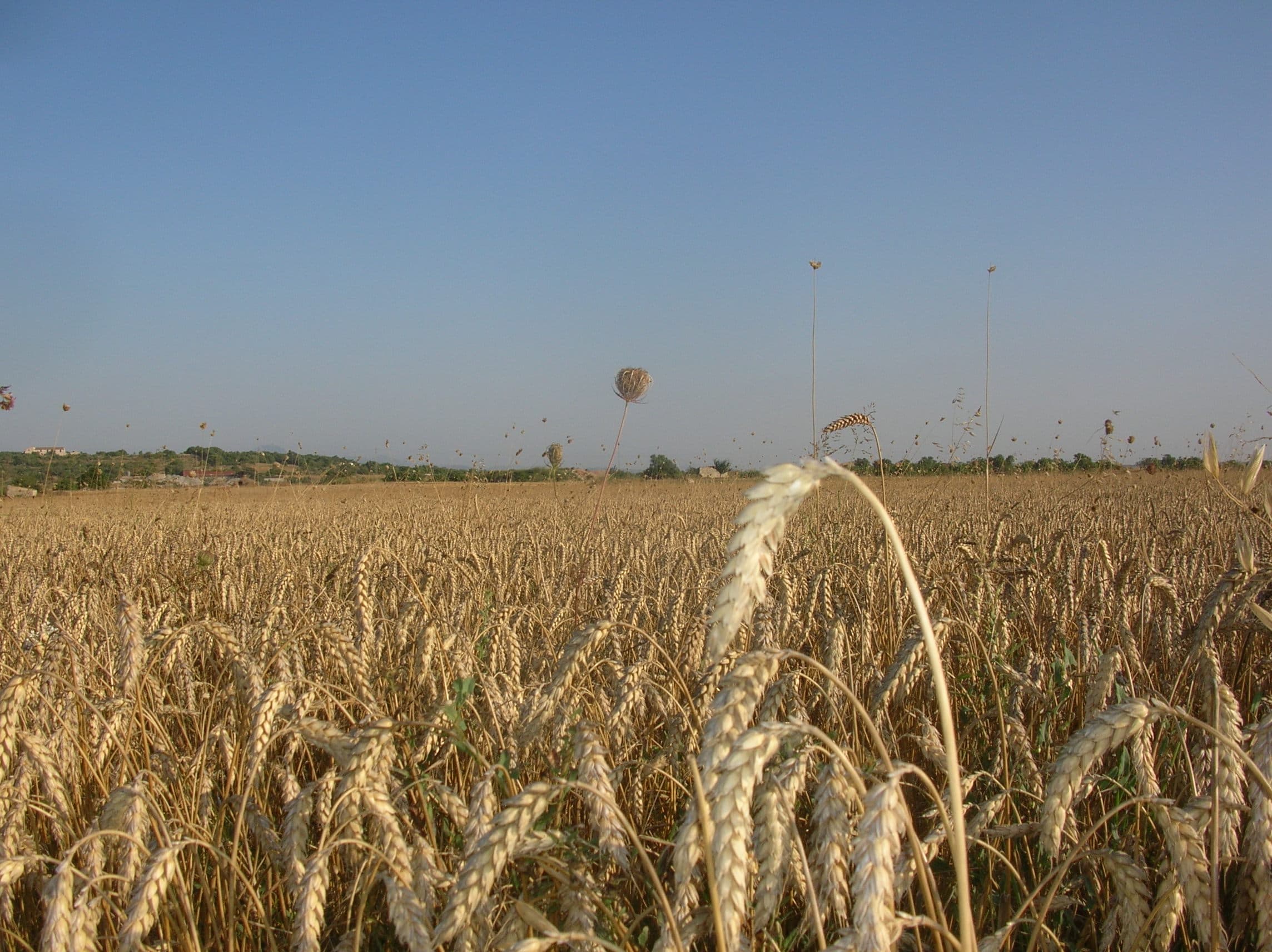
The Migjorn is the southern half of Mallorca, beyond the urban Palma and the sierra, and it is also the least urban part of the island and the one with the largest finca surface. It is a rolling plain with limestone outcrops, constant easterly winds along the coast, and a long, dry summer. Five municipalities cover most of the territory: Llucmajor with its agricultural plateau and the open Cap Blanc coast; Campos with its wine, almond and productive olive; Felanitx with its low hills, modern vineyards and hilltop shrines; Sant Joan in the heart of the cereal Pla; and Santanyí with the rocky southeastern coast and the cream-coloured stone that gave its name to Palma's cathedral.
Migjorn gardens accompany rural fincas and restored country houses, mixing productive and ornamental without embarrassment: kitchen garden, orchard, Mallorcan gravel, dry-stone wall, carob pergola, and drought-tolerant planting as the backbone. Rural in feel, generous in scale, restrained in taste. The palette combines Olea europaea, Prunus dulcis, Ceratonia siliqua, Phoenix dactylifera, Quercus ilex and Pistacia lentiscus as the tree matrix, with Rosmarinus officinalis, Lavandula, Cistus, Salvia and Thymus at the base. Along the coast the salt-tolerants step in (Tamarix gallica, Carpobrotus, Nerium oleander). Dry limestone soil, low rainfall, calendar set by the harvest and the summer irrigation.
Zone data
Soil, climate and altitude.
- Soil
- Annual rainfall
- Sunshine hours
- Typical altitude
The towns
Five municipalities, one south.
Llucmajor
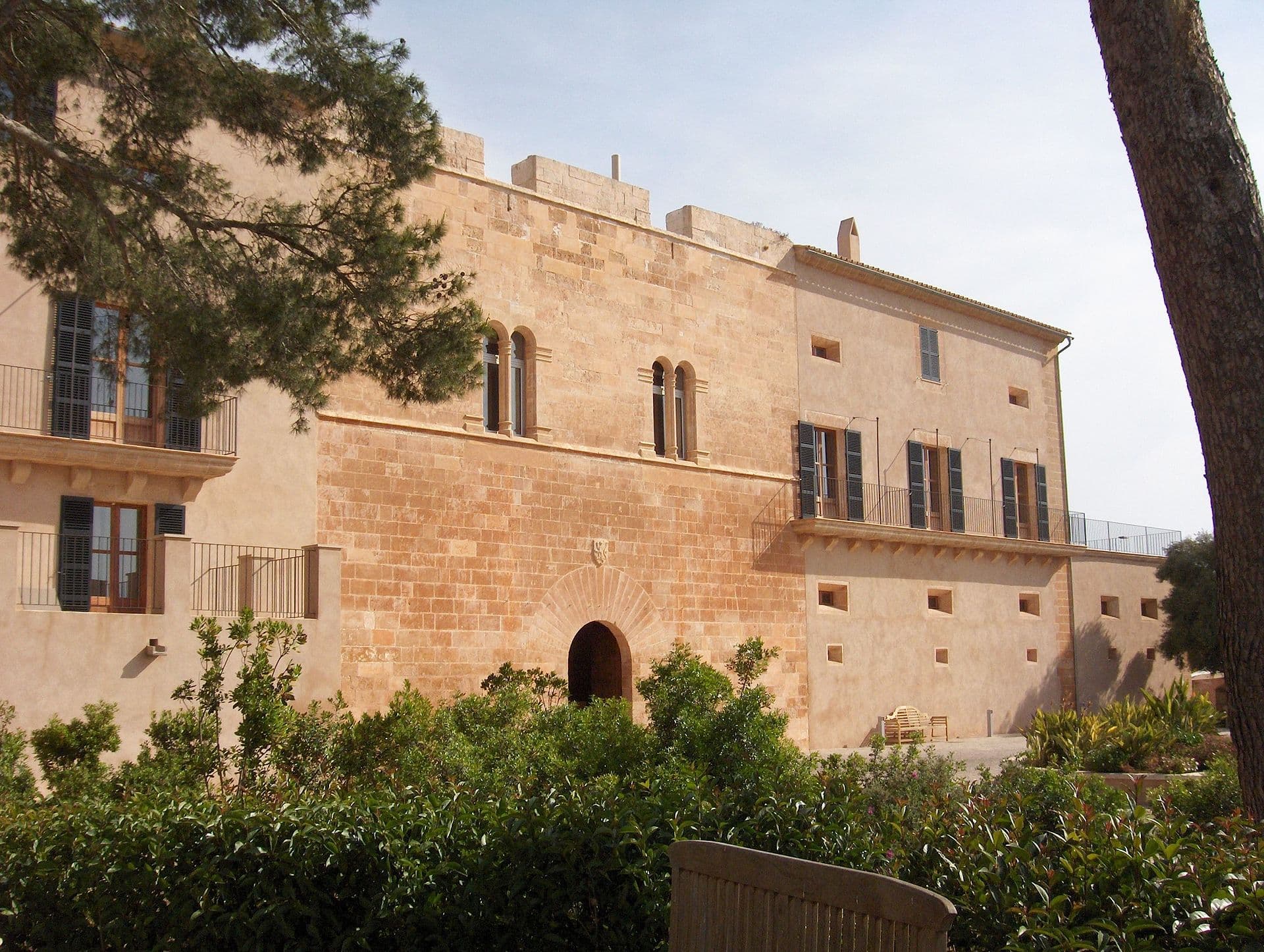
Llucmajor combines the inland agricultural plateau with the open coast of Cap Blanc and Sa Ràpita, and is one of the largest municipalities on the island. Its territory is divided between scattered fincas, old-stand almond groves, vineyards in clear expansion and a growing residential park, mostly along the coast. The dominant soil is dry limestone, shallow over the bedrock and with low rainfall, which sets the entire choice of plant: Prunus dulcis, Ceratonia siliqua, Olea europaea, Pistacia lentiscus, Rosmarinus and Cistus have earned their place by handling what the climate imposes. Along the coast, wind and salinity force tougher species such as Tamarix gallica, Nerium oleander, Carpobrotus or Schinus molle. Typical gardens are those of large fincas with restored country houses, often inherited possessió, and coastal villas with pools.
Campos
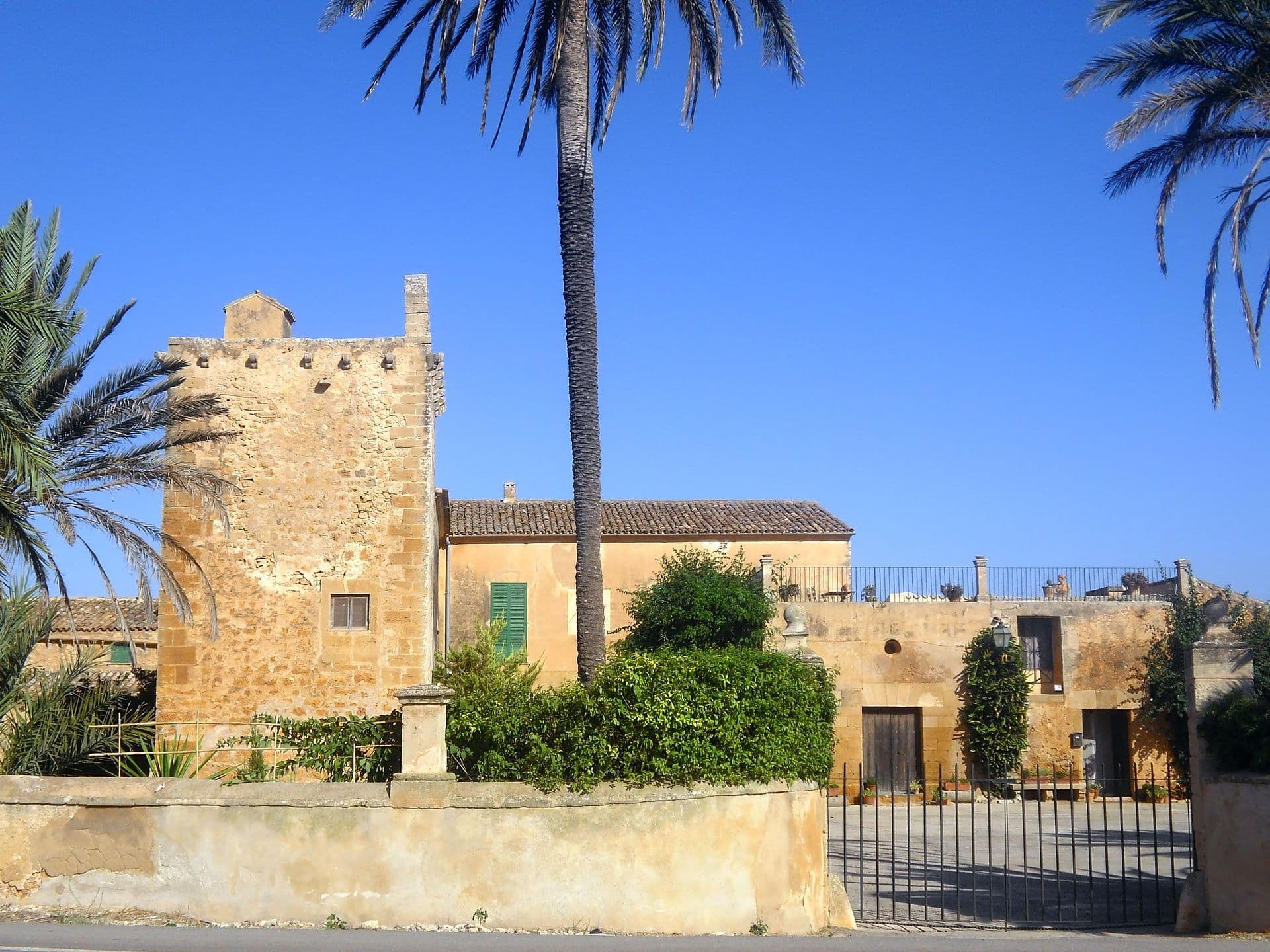
Campos is living traditional agriculture, not stage set: appellation wine, dairy, productive olive, almond, market gardening and a generous depth of red soil. The population is densely rural, with many actively farmed fincas and a good number of agroturismos that rent rooms or whole houses without disguising the agricultural character of the surroundings. Gardens here speak with the finca explicitly: Vitis vinifera climbing over pergolas, Mediterranean fruit trees in shade (Ficus carica, Punica granatum, Citrus sinensis), aromatics planted along the wall foot (Rosmarinus, Lavandula, Thymus) and Mallorcan gravel as ground. Typical projects look to add value to the property without losing the agricultural identity, with outdoor dining area under Ceratonia siliqua, drought-tolerant planting and little more. Soil is deep and red in places, limestone in others. Seasonal maintenance, calendar set by harvest.
Felanitx
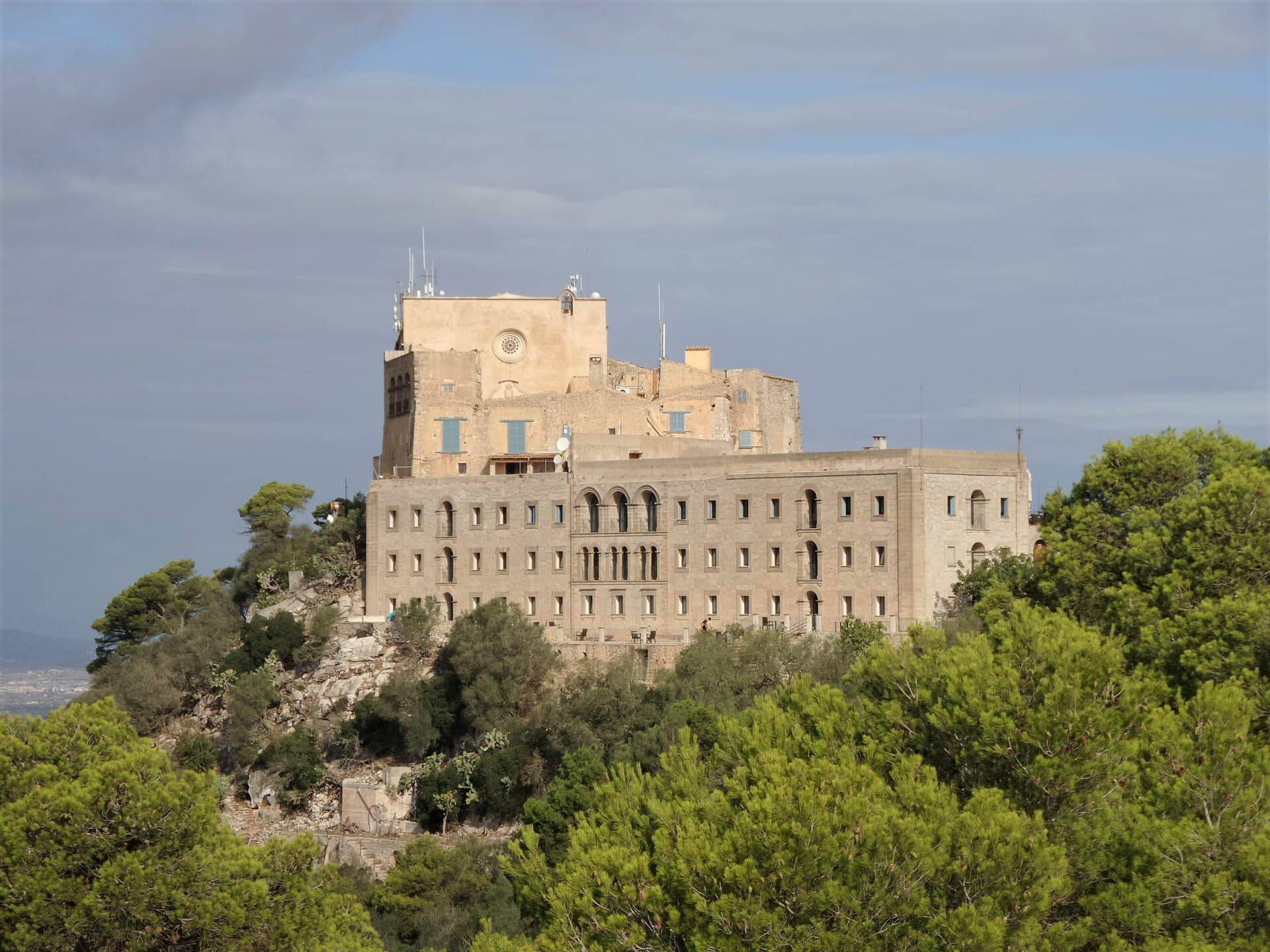
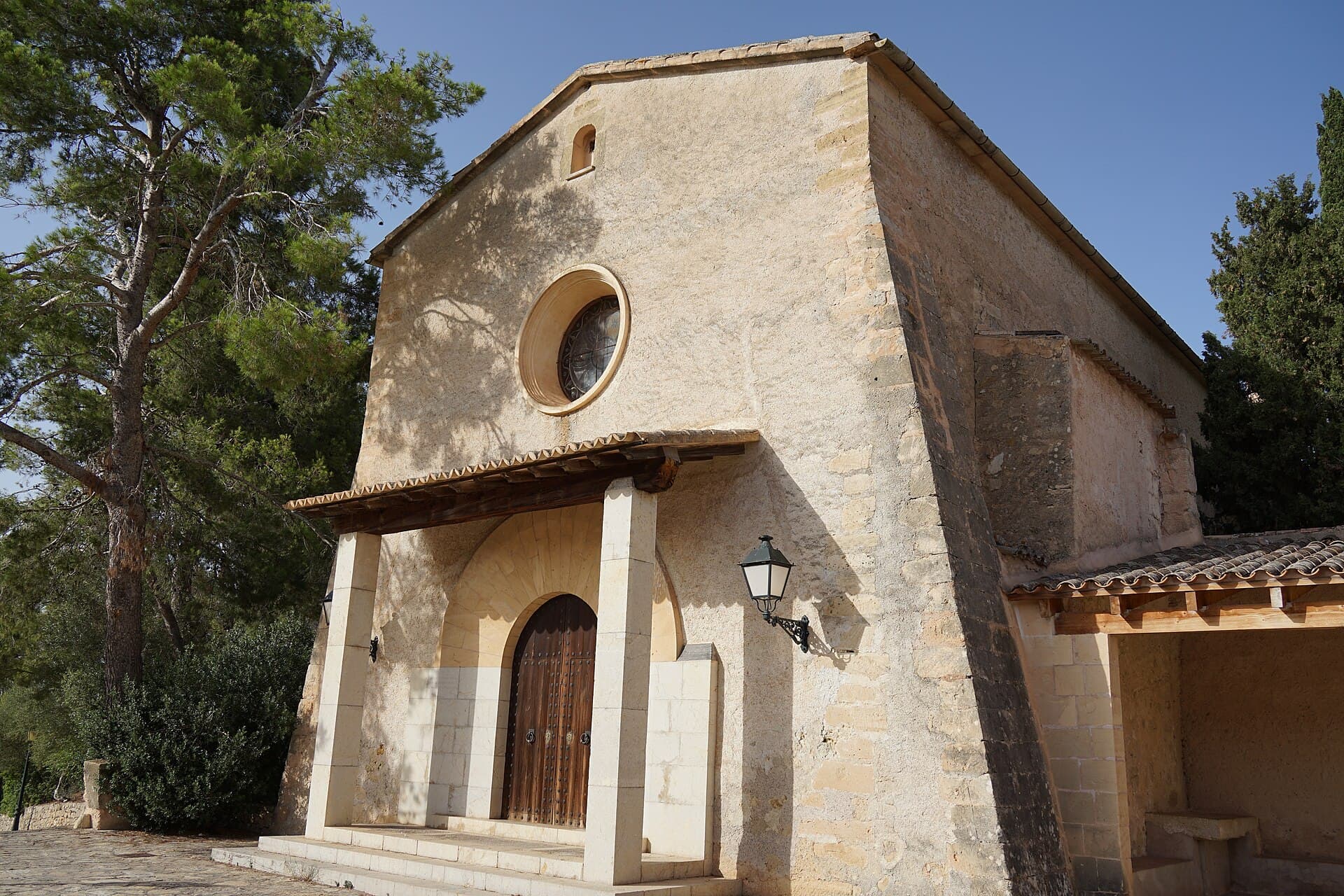
Felanitx is a landscape of low hills and valleys, crowned high above by the Santuari de Sant Salvador, its silhouette unmistakable against the southern sky. Fincas sit at medium altitude and combine old olive, almond, modern vineyard and orchard on plots that are sometimes extensive. Recognised wineries such as Anima Negra, 4 Kilos and Mesquida Mora anchor the wine identity of the area and have lifted the price of agricultural land sharply over the last decade. Typical gardens are those of fincas with restored country houses and villas near Portocolom, with a restrained Mediterranean palette: free-form Olea europaea, Lavandula, Rosmarinus, Cistus, Agave attenuata as accent, and Mediterranean fruit trees (Punica granatum, Ficus carica, Citrus sinensis) in shade. Soil more varied than in Campos, with frequent rocky outcrops. Classic Mediterranean maintenance, agricultural rhythm.
Sant Joan
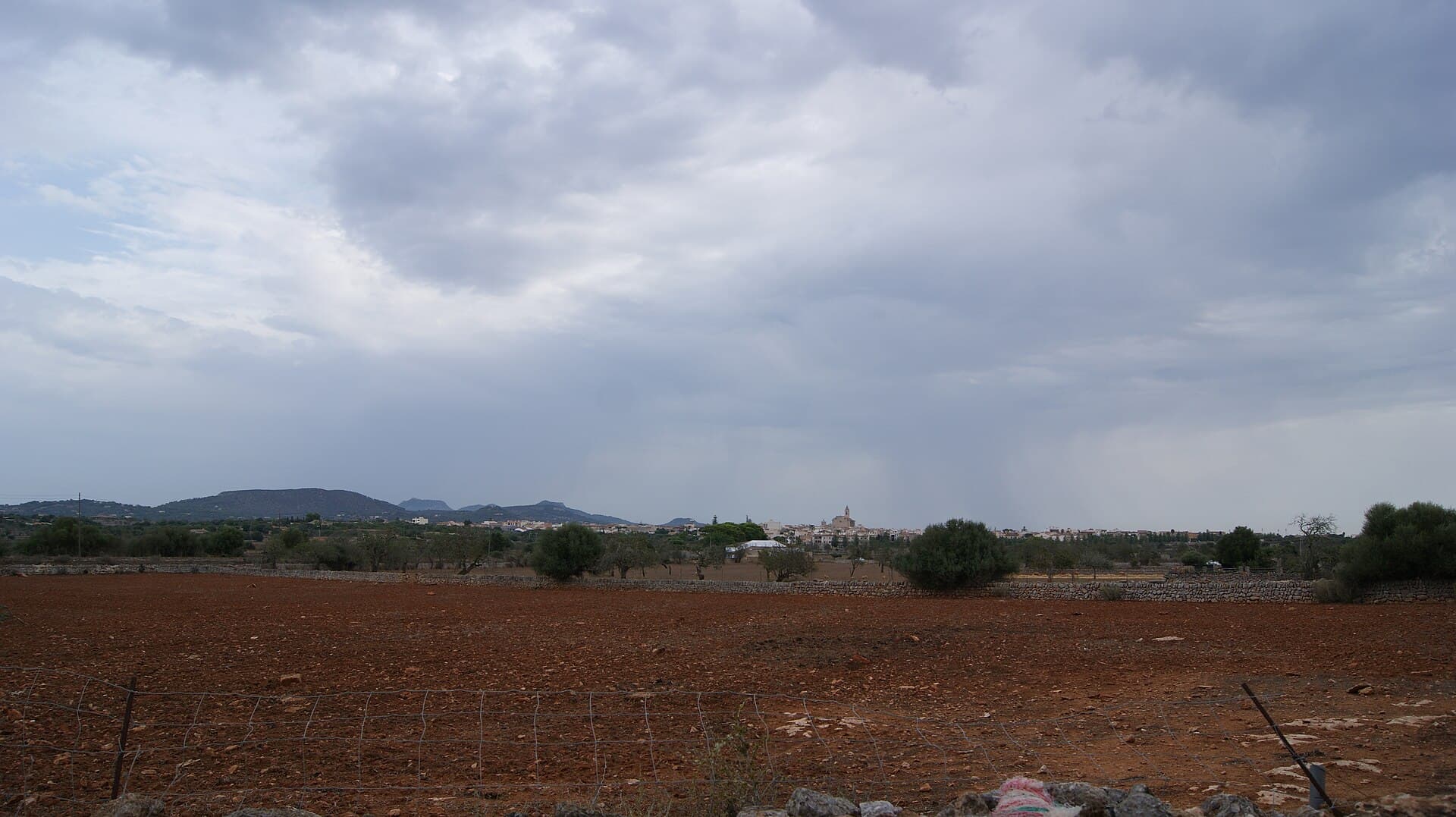
Sant Joan is a village at the centre of the Pla, with a cereal landscape, the occasional torre de molí still standing, and a traditional agriculture that has survived without major reconversion. The fincas are noticeably less tourist-oriented than those of Campos or Felanitx, with a small residential park and many old family houses, often divided between siblings. Typical gardens are austere, almost monastic: dry-stone wall as the boundary, vines on a pergola, Mediterranean fruit trees in shade (Ficus carica, Olea europaea, Punica granatum), Mallorcan gravel, and low-water planting with Rosmarinus, Lavandula, Cistus and Pistacia lentiscus. When a finca shifts to residential use, the challenge is to respect the austere image of the Pla and not slip into the marketing villa. Clay-limestone soil, long dry summer heat. Low-impact maintenance, simple, well-marked calendar.
Santanyí
Santanyí is the coastal face of the southeast: Cala d'Or, Cala Figuera, Portopetro, Cala Santanyí, Cala Llombards. The cream-coloured, golden Santanyí stone, famous from the cathedral in Palma, surfaces here in walls, exposed rock and kerbs, and dictates much of the material palette of the gardens. The residential park is high and sustained, with coastal villas, international second homes and many urbanisations from the eighties that have since been updated. The climate is drier than that of Andratx and the wind comes from the east. The dominant plant palette mixes coastal Mediterranean garden (free-form Olea europaea, mature Phoenix dactylifera, Bougainvillea over pergola, Agave attenuata as accent) with salt- and wind-tolerant planting (Tamarix gallica, Nerium oleander, Pittosporum tobira, Carpobrotus). Intense seasonal maintenance, careful attention to the long summer and the salt spray that finds its way onto every terrace.
Services available in the Migjorn.
Creation
Full projects on converted rural fincas: Mediterranean garden, gravel, dry-stone wall and outdoor dining areas.
Maintenance
Calendar tuned to large fincas with olive grove, almond and orchard, with controlled summer irrigation.
Specialised
Almond and productive olive-grove pruning, rural-finca clearing and robot mowing on generous plots.
Where we work
We serve all of Mallorca.
Each area has its own character, soil and gardens. Click a zone to discover it.
We serve villas and properties in Andratx, Calvià, Santa Ponsa on the southwest coast; Banyalbufar, Estellencs, Deià in the northern Tramuntana; Valldemossa, Bunyola in the central Tramuntana; Palma, Marratxí in the Bay of Palma; Llucmajor, Campos, Felanitx, Sant Joan, Santanyí across the Migjorn; Sóller; and Alcúdia, Pollença in the north.
Frequently asked questions
- The south is the driest part of the island, with 350-450 mm a year and over 3,000 hours of sun, and the palette is built accordingly. As tree matrix: Olea europaea, Prunus dulcis (almond), Ceratonia siliqua (carob), Phoenix dactylifera, Quercus ilex and Pistacia lentiscus; below, Rosmarinus officinalis, Lavandula, Cistus, Salvia and Thymus. On the Santanyí and Cap Blanc coast, the salt-tolerant species step in: Tamarix gallica, Nerium oleander, Pittosporum tobira and Carpobrotus.
- Large-finca work weighs more than marketing-villa work. The everyday job list runs through olive, almond and carob maintenance, rural-finca clearing, pruning of productive almond and olive, and full new-garden design on converted rural fincas, with Mallorcan gravel, dry-stone walls and an outdoor dining area under Ceratonia siliqua. On the Santanyí coast, intense seasonal maintenance is added to deal with sea aerosol and easterly winds.
- The Migjorn is the dry south: long heat, long summer and rainfall concentrated in autumn. Pruning of productive almond and olive is scheduled at the tail of winter, before bud break; new planting goes in during autumn with the first rains, so the roots can settle before the heat. Summer is reserved for fine irrigation control and preventive clearing of rural fincas, because anything not adapted to the dry calcareous soil is quickly lost.