
OFICI · 9 MAIG 2026 · 7 MIN DE LECTURA
Com pujar a una palmera sense matar-la.
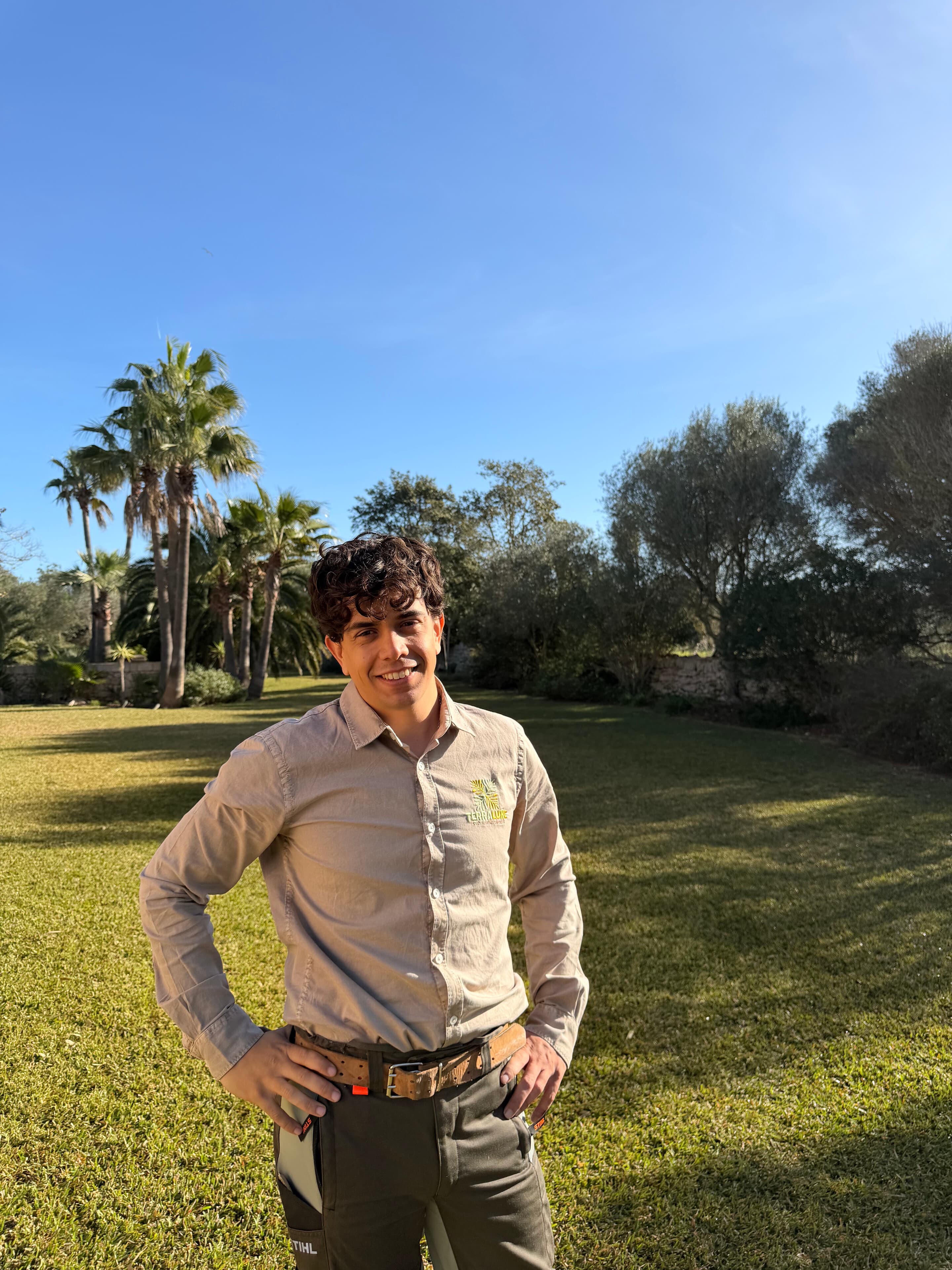
Adrià MunnéFundador, arborista certificat
Tota palmera, arribat el moment, es converteix en un problema tècnic. Les fulles creixen, les inflorescències cauen, el pes s'acumula en una corona inaccessible des de terra. I comença la pregunta: com pugem?
Qualsevol que tingui una palmera gran a la seva finca ho sap. Arriba un moment en què l'arbre es gestiona sol durant anys, fins que un dia les fulles seques comencen a penjar pesades, les inflorescències cauen sobre el camí, els fruits embruten la piscina, i el port general demana una intervenció. Quasi sempre el cogoll és a més de deu metres, fora de l'abast de qualsevol escala domèstica.
I aleshores apareix la pregunta que canvia tota la resta: com pugem? Perquè la palmera, a diferència d'una olivera o un pi, castiga les decisions equivocades durant la resta de la seva vida. Aquesta entrada explica les tres maneres de pujar, què deixa cada una al tronc i com triar bé segons la palmera que tinguem al davant.
La palmera no és un arbre
Botànicament, una palmera no és un arbre tal com entenem una olivera o un roure. És una monocotiledònia arborescent. No té creixement secundari, no té càmbium vascular, no engreixa el tronc amb anells anuals, i, sobretot, no cicatritza. El que en un dicotiledoni és una ferida que es compartimentalitza amb teixit nou, en una palmera queda com un forat permanent en l'estructura.
Aquest fet biològic, aparentment menor, reescriu totes les decisions de cura: cada tall de fulla, cada perforació del tronc, cada punxada d'un espoló és una marca per sempre. La palmera no les pot reparar. Només pot conviure-hi fins que la suma de ferides, o un patogen que entri per alguna, l'acaba.
Tres maneres de pujar
En la pràctica de l'arboricultor professional hi ha tres tècniques d'accés a una palmera. Cada una resol el mateix problema (arribar al cogoll) d'una manera molt diferent, i deixa empremtes molt diferents. Val la pena conèixer-les.
La bicicleta palmera
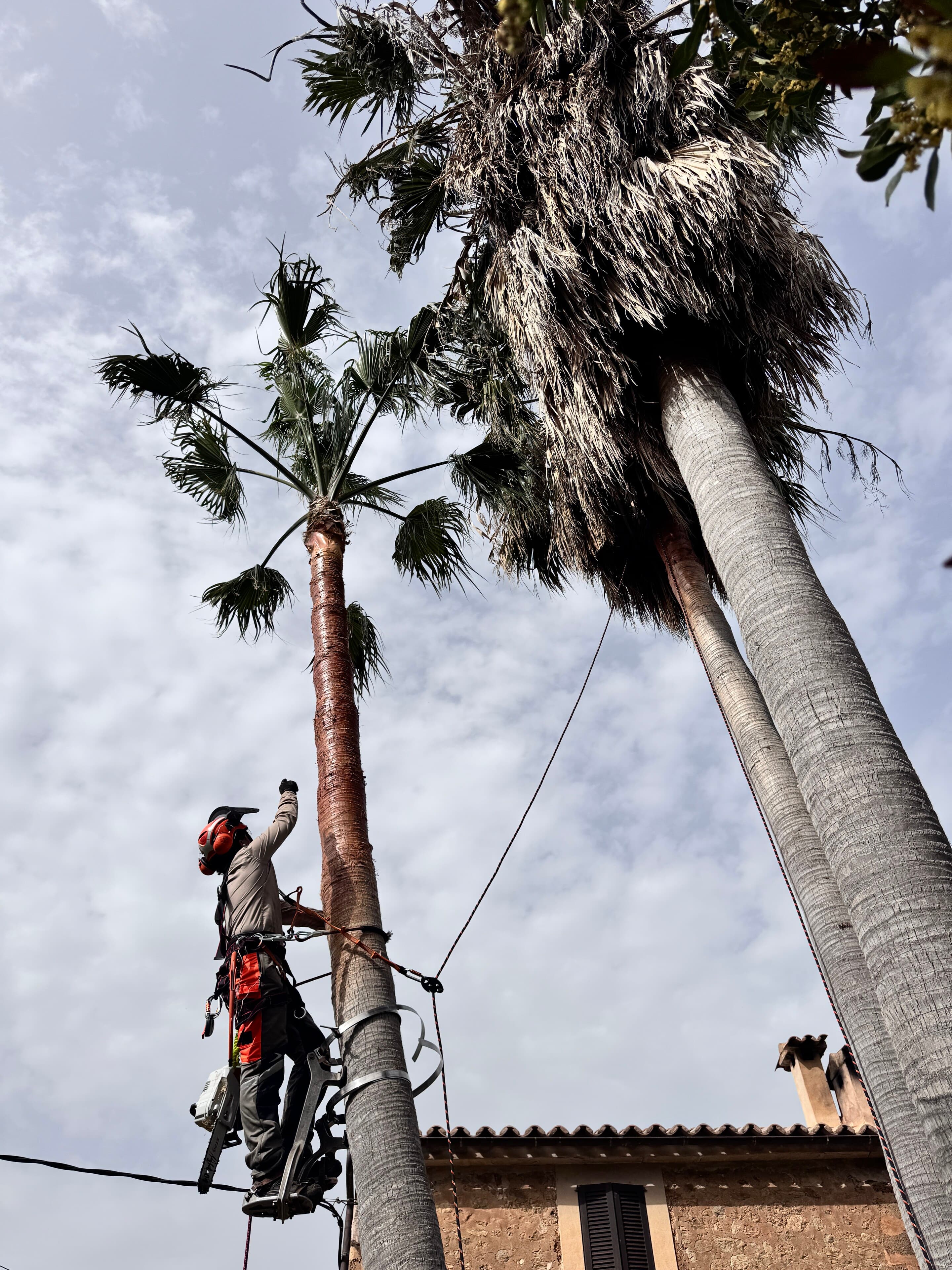
La bicicleta palmera és un parell d'estreps articulats amb cintes amples i encoixinades que abracen el tronc. L'operari puja alternant pes d'un costat a l'altre, fent lliscar cada cinta cap amunt mentre descarrega a l'altra. El tronc rep pressió repartida sobre superfícies àmplies, sense penetració. Zero punxades, zero marca.
És la tècnica més respectuosa amb l'arbre, i la favorita per a palmeres d'alçada mitjana. El preu és temps: instal·lar i pujar amb bicicleta és més lent que pujar amb espolons, i en palmeres molt altes exigeix una resistència física considerable. En Washingtonia o Phoenix de menys de dotze o quinze metres, però, la diferència de temps gairebé no es nota.
Això sí: perquè la bicicleta agafi, el tronc ha d'estar prèviament pelat. Sobre baines seques, les cintes patinen i l'ascens deixa de ser segur. Per això, abans de pujar amb aquesta tècnica, comprovem que la neteja del tronc s'hagi fet en alguna visita anterior.
La corda
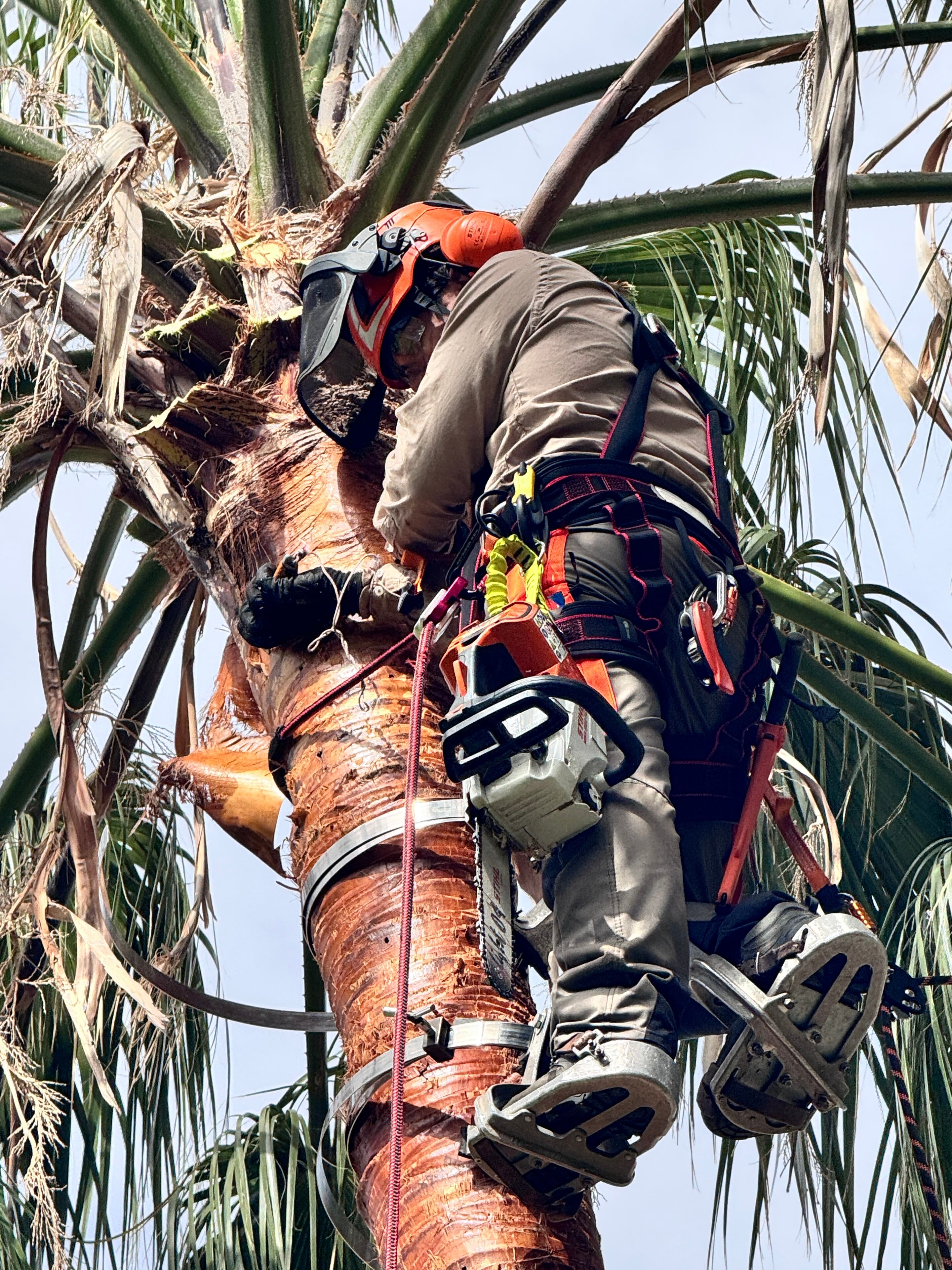
La corda consisteix a ancorar una línia a la corona de la palmera i ascendir-hi amb bloquejadors mecànics i pedals, en sistemes SRT (single rope) o DRT (doubled rope). És la tècnica estàndard de l'arboricultura moderna en arbres alts. En palmeres es fa servir menys perquè ancorar bé en una corona de palmera no és trivial: cal confiar en els pecíols de les fulles vives o en una estructura artificial, i això demana criteri.
Quan l'ancoratge es resol bé, la corda permet treballar en posicions impossibles per a la bicicleta, baixar amb control, i reposicionar-se sense haver de tornar a baixar. Però té un sostre pràctic: per damunt de dotze o quinze metres, muntar un ancoratge segur a la corona es converteix en un repte enorme, i moltes vegades simplement no és viable. En el rang baix i mig la corda brilla; més amunt, la bicicleta agafa el relleu.
Els espolons amb punxes
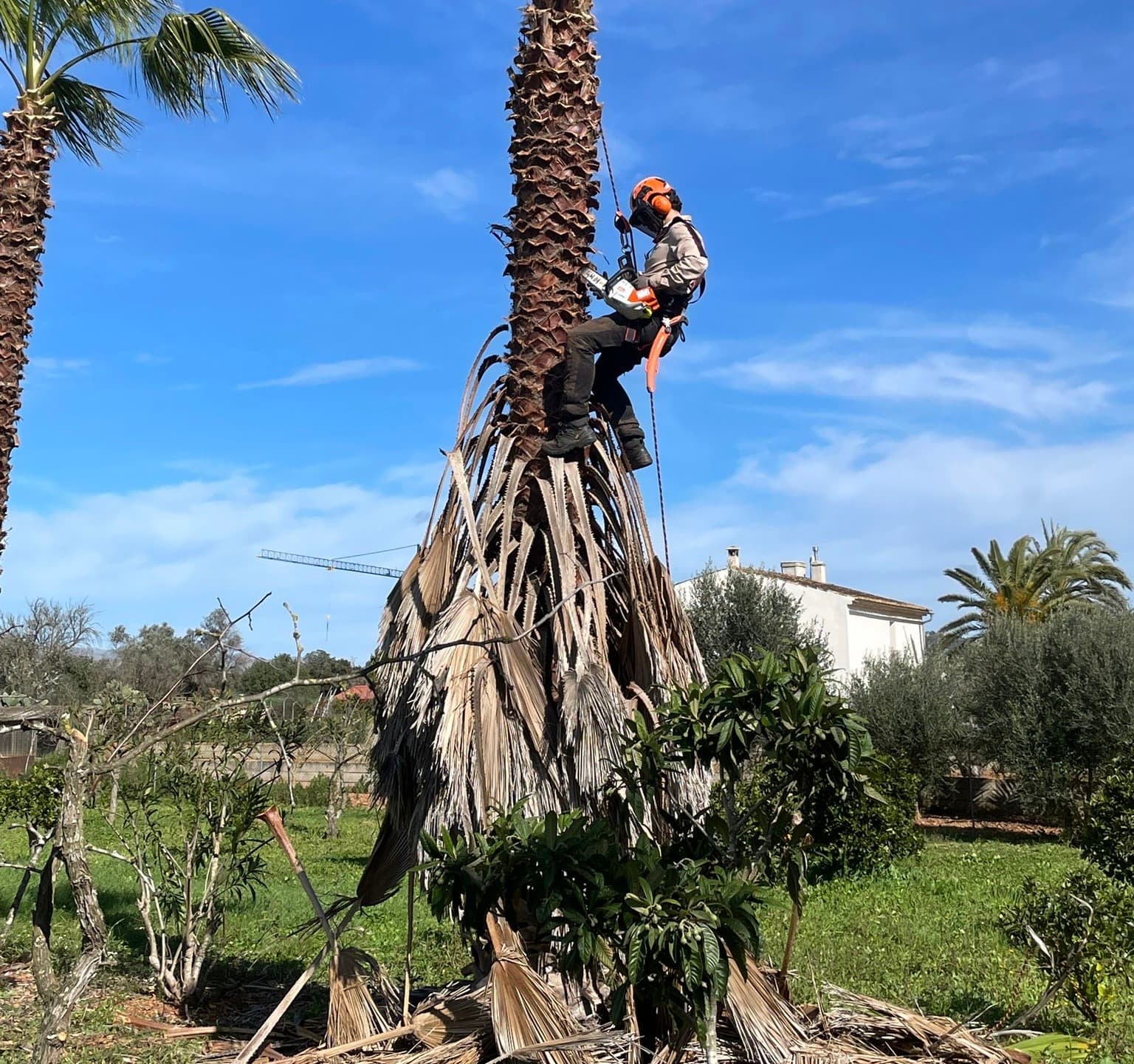
Els espolons amb punxes, també anomenats gaffs o urpes, són marcs metàl·lics lligats al panxell i al peu, amb punxes d'un a tres centímetres que es claven al tronc a cada pas. Permeten pujar molt ràpid, sense instal·lació prèvia, gairebé sense material. Són l'estàndard per a pals telefònics, per a arbres morts que es tallaran i, en algunes regions, també per a arbres vius.
El problema és el que deixen darrere. Vint passos de pujada i vint de baixada són quaranta forats al tronc. Si hi ha cinc visites en la vida de la palmera, en són dos-cents. En un arbre que no cicatritza, cada un d'aquests forats queda obert, i junts formen un patró de ferides acumulades que cap teixit no tancarà mai.
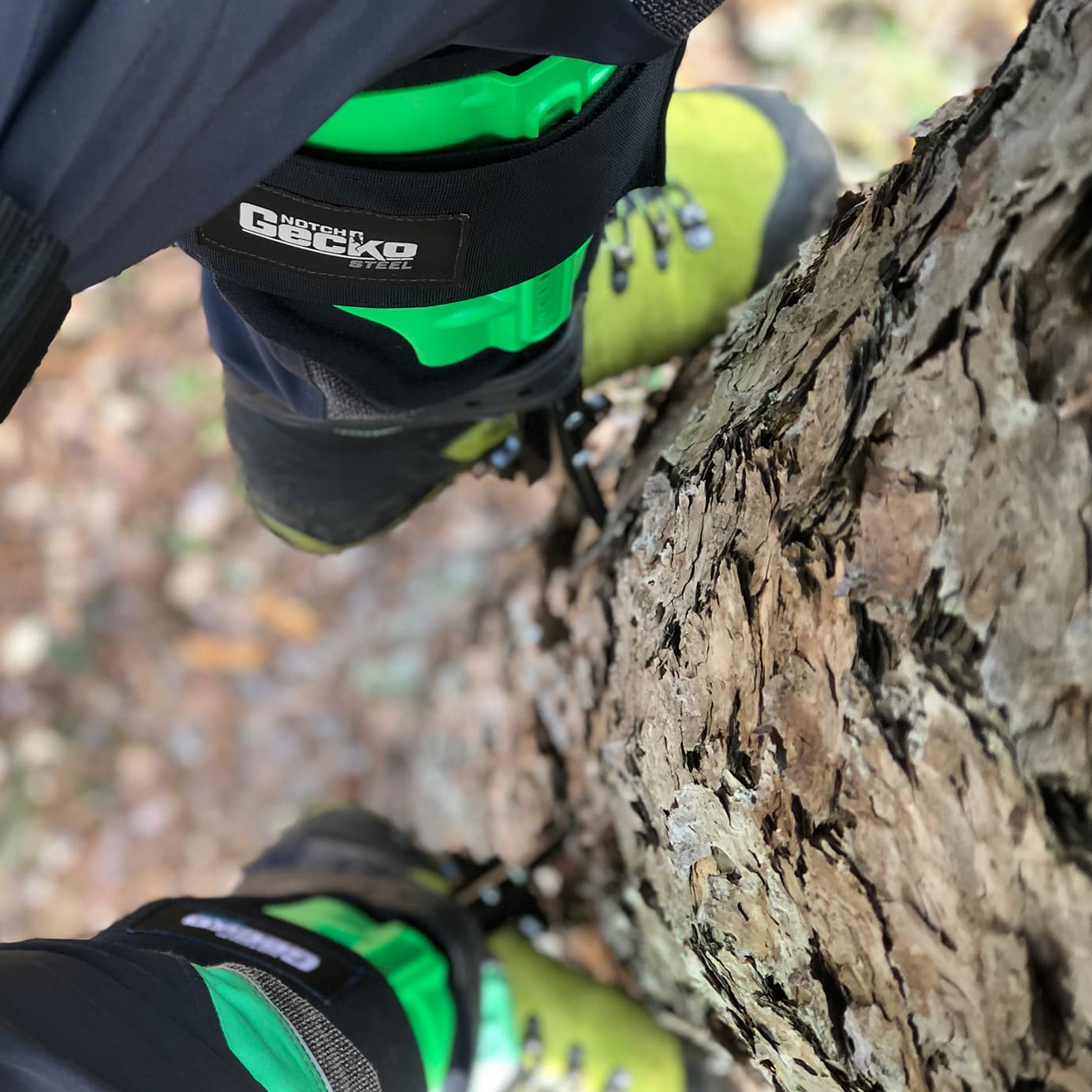
El preu dels espolons
El dany dels espolons no es veu el dia de la poda: es veu al llarg dels anys. Cada punxada queda oberta per sempre, perquè la palmera no cicatritza. Vint passos de pujada i vint de baixada són quaranta perforacions distribuïdes en espiral al voltant del tronc; si aquesta palmera es puja cinc vegades al llarg de la seva vida, en són dues-centes. Si t'hi acostes prou, l'empremta es veu a simple vista.
Aquesta empremta no és només estètica. Cada forat és una via oberta cap als feixos vasculars, i per allà entren els fongs del sòl i de l'aire (Thielaviopsis paradoxa, espècies de Fusarium) i també els dos insectes que maten palmeres a Mallorca, Paysandisia archon i Rhynchophorus ferrugineus. El conjunt de ferides treballa durant anys: la palmera perd vigor a poc a poc, es torna més vulnerable a la plaga següent que passa, i mor abans del que li tocaria.
Què en diu la recerca
La raó biològica de tot l'anterior és l'anatomia de la palmera. Segons la fitxa tècnica EP473 del programa IFAS de la Universitat de Florida, les palmeres no tenen meristemes laterals ni càmbium vascular, les estructures que en els arbres convencionals produeixen els anells de creixement i permeten tancar les ferides amb teixit nou. Per això tota ferida al tronc és permanent. I tot el creixement futur depèn d'un únic meristema apical situat al cogoll: si aquest meristema mor, la palmera sencera mor amb ell, sense possibilitat de rebrot.
El morrut roig (Rhynchophorus ferrugineus) posa en xifres el que les ferides obertes acaben sent. Detectat a Espanya als anys noranta i consolidat al Mediterrani des de mitjan dos mil, cada femella diposita entre 200 i 400 ous en ferides fresques del tronc. La poda i el dany mecànic emeten kairomones que atrauen activament les femelles. Només a la Comunitat Valenciana es van comptabilitzar uns vint mil palmeres mortes entre 2004 i 2009, amb pèrdues estimades al voltant de setze milions d'euros (EPPO, RHYCFE).
Cuteat i corvelló: la condició de l'accés segur
El cuteat a la Washingtonia i el corvelló a la Phoenix són tècniques d'ofici que realcen la silueta de la palmera i, alhora, deixen el tronc preparat perquè les cingles de la bicicleta per a palmeres hi puguin agafar amb seguretat, sigui quina sigui l'alçada de l'arbre. Amb navalla a la Washingtonia, amb corvelló a la Phoenix, es desprenen les beines llenyoses i les restes foliars que queden adherides al tronc després de la caiguda natural de la fulla. No retiren teixit viu. No comprometen la salut de la palmera. I són, a més, la condició que permet treballar sense recórrer als espolons amb punxes.
L'important és fer-ho a cada visita. Si el cuteat i el corvelló es mantenen al dia, la palmera està sempre llesta perquè la bicicleta hi pugi sense feina prèvia. Quan això es descuida durant anys, les beines s'acumulen al llarg de metres i metres de tronc, i la primera intervenció pot consumir una jornada sencera de neteja només per deixar la palmera en condicions de pujar-hi.
Per què tantes palmeres acaben en poda en ploma
En palmeres molt altes, pujar amb bicicleta o amb corda és lent, físicament exigent i costós per hora treballada. El client vol abaratir la visita, i el jardiner, amb bona intenció, proposa una solució que sona raonable: podar més agressiu a canvi d'espaiar la pròxima intervenció. És un acord silenciós, sense mala fe per cap banda, i la seva conseqüència triga anys a fer-se visible.
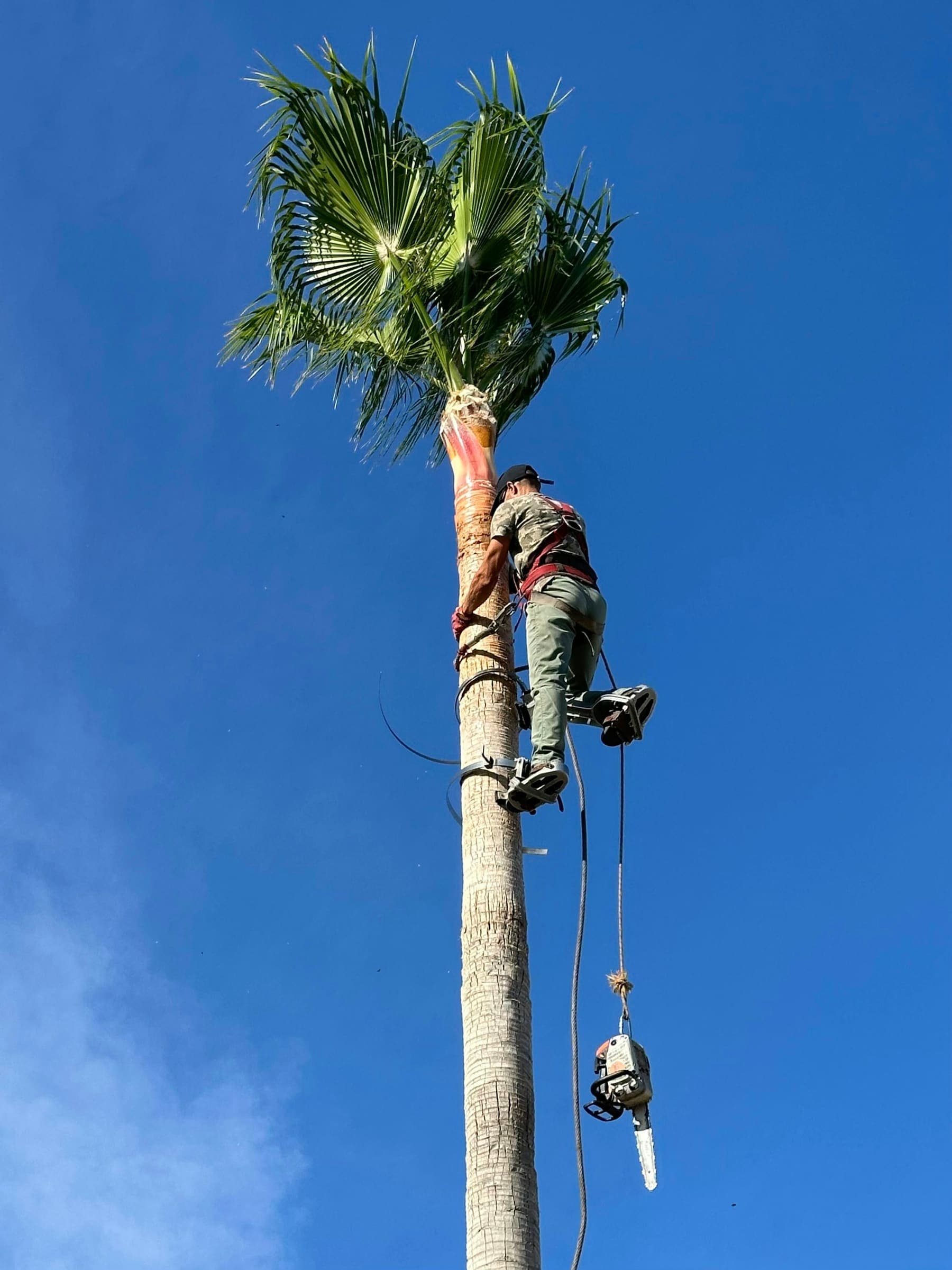
La pràctica té un nom: poda en ploma o skirt pruning, retirar les fulles verdes actives fins a deixar la palmera amb una corona mínima. Redueix dràsticament la capacitat fotosintètica, estressa l'arbre, debilita les seves defenses i el deixa més vulnerable justament quan més necessitaria estar fort per resistir Paysandisia i fongs oportunistes. El cercle es tanca sol: el següent jardiner veu una palmera més feble, torna a fer servir espolons perquè «ja no val la pena muntar res», i la palmera mor abans de complir el seu segon segle.
Com triar bé
Per al propietari, sense necessitat de ser arborista, la regla és més senzilla del que sembla: la bicicleta palmera és sempre la millor opció i, en palmeres molt altes, l'única opció viable. La corda té sentit fins als dotze o quinze metres, no més; per damunt, l'alçada fa inestable el ràpel i multiplica el temps d'instal·lació. Els espolons amb punxes queden descartats per les raons de l'apartat anterior.
La condició perquè la bicicleta funcioni a qualsevol alçada és que el tronc estigui cuteat o corvellonat al dia. Per això importa mantenir aquestes dues tècniques a cada visita, any rere any. Una palmera cuidada de manera contínua triga una hora a quedar llesta per pujar-hi; una palmera descuidada durant una dècada pot consumir una jornada sencera només per preparar el tronc abans de poder-hi intervenir.
El valor de la palmera quasi sempre justifica la decisió lenta. Una Phoenix dactylifera adulta o una Washingtonia robusta en una finca de Pollença pot tenir cinquanta o cent anys. Comprar-ne una altra del mateix port no és possible, i plantar-ne una i esperar que creixi tampoc. El que es perd no es compra.
A TerraLuxe pugem sempre amb bicicleta o amb corda. Mai amb espolons en una palmera viva. És més lent, i de vegades el client ho nota al pressupost. Però la palmera viu dècades més, i això, en un jardí madur de Mallorca, és l'única mesura que importa.
Preguntes freqüents
- Per què no es poden fer servir espolons amb punxes en una palmera viva?
- Perquè les palmeres no cicatritzen. Cada perforació és permanent i fa de porta d'entrada per a Rhynchophorus ferrugineus, Paysandisia archon i fongs com Thielaviopsis paradoxa o espècies de Fusarium. Una poda mitjana suposa unes quaranta perforacions; cinc visites al llarg de la vida de l'arbre són dues-centes. L'estàndard arborícola internacional ANSI A300 prohibeix els espolons en arbres vius excepte en escenaris molt excepcionals com pals telefònics o línies elèctriques remotes.
- La corda fa malbé el tronc de la palmera?
- No. La tècnica de corda treballa per fricció sobre la superfície del tronc mitjançant cingles i descensors que reparteixen la càrrega sense penetrar-lo. La limitació de la corda no és el dany sinó l'alçada: per damunt dels dotze o quinze metres, instal·lar un ancoratge segur a la corona es torna lent i inestable, i la bicicleta palmera passa a ser l'única opció viable.
- Què he de fer si la meva palmera ja ha estat pujada amb espolons diverses vegades?
- El dany previ no es reverteix: les ferides són permanents. Però a partir de la primera intervenció sense espolons ja no s'afegeix dany nou. Si la palmera mostra símptomes (forats amb serradures fresques, llança caiguda o ennegrida, fulles joves perforades), cal inspecció i tractament immediat. Si no els mostra, n'hi ha prou amb canviar de tècnica i mantenir cuteat o corvelló al dia a cada visita.
- Què és el corvelló i en què es diferencia de la navalla del cuteat?
- El corvelló és una fulla corba d'acer forjat amb mànec curt, semblant a una falç petita però més rígida, dissenyada específicament per desprendre les beines llenyoses del tronc de la Phoenix. La curvatura permet treballar en contacte amb el tronc sense que la fulla se separi. A la Washingtonia, en canvi, les beines són més toves i es desprenen amb navalla recta molt afilada. Cada palmera té la seva tècnica i la seva eina.
Fonts
Les recomanacions d'aquest article combinen l'estàndard arborícola ANSI A300, les publicacions tècniques d'UF/IFAS (EP473) i les dades d'EPPO sobre Rhynchophorus ferrugineus, amb l'experiència operativa de TerraLuxe en jardins de Mallorca. No constitueixen un protocol mèdic-fitosanitari formal: si la seva palmera mostra símptomes actius de plaga, o té historial d'espolons, recomanem una inspecció a finca abans de qualsevol intervenció.
Adrià Munné
FUNDADOR · ARBORISTA CERTIFICAT
Català de família, format entre Mallorca i Zuric. Arborista certificat, dissenyador en permacultura. Escriu en aquest Diari sobre l'ofici i les plantes que fan el paisatge balear.